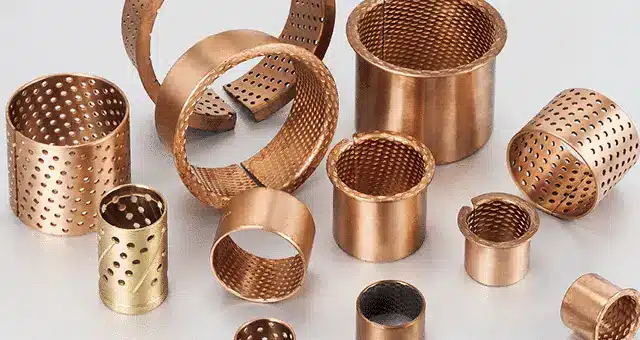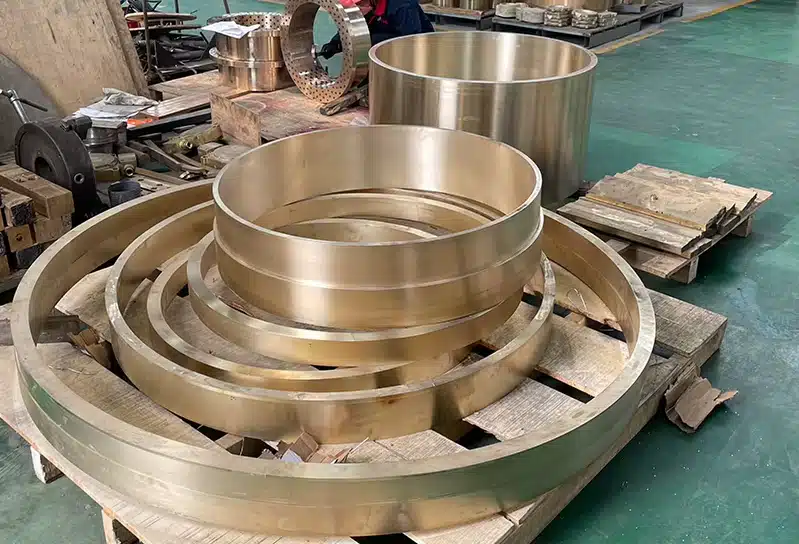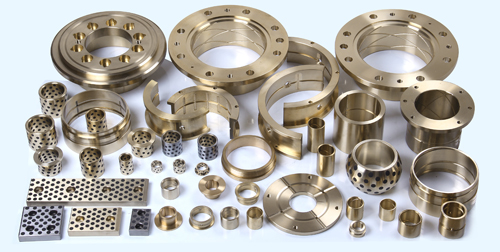
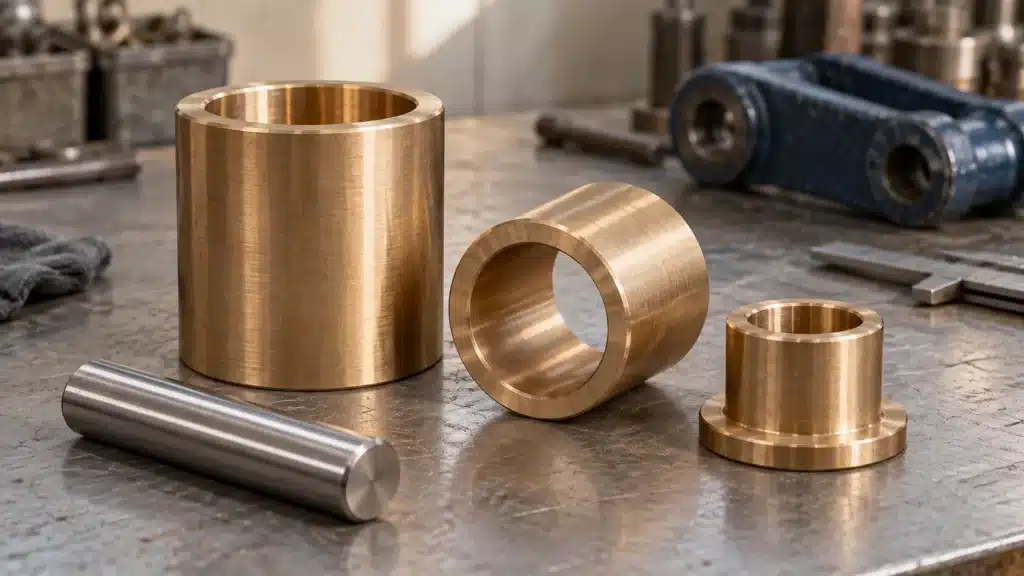
tin bronze bushing

When Should You Choose a Bronze Bushing
Interpretation of Bushing Knowledge

When Should You Choose a Bronze Bushing

I’ve been in this industry for over two decades, and I still see engineers overcomplicate this. A bronze bushing is a fairly simple part. Choosing one gets more difficult when the catalog has to stand in for a proper description of the machine. ‘Heavy load’ might mean a steady load all afternoon, or a sharp impact every few seconds. Those aren’t the same enquiry.

Take lubrication. A grease fitting on the drawing looks straightforward. Put the joint behind a guard, then put another assembly in front of the guard, and servicing it becomes a different job. Or take the load: the figure during steady running may tell you very little about the impact when the machine jams.

Here are eight reasons to put bronze on the shortlist, with a few details to settle before ordering.
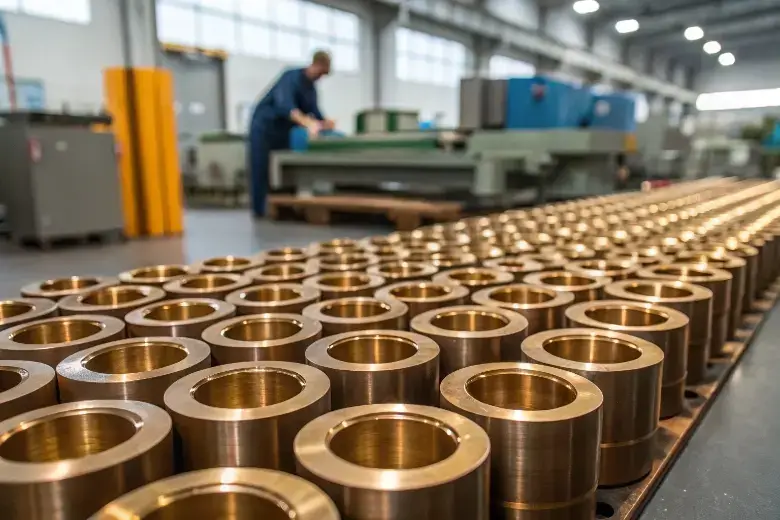
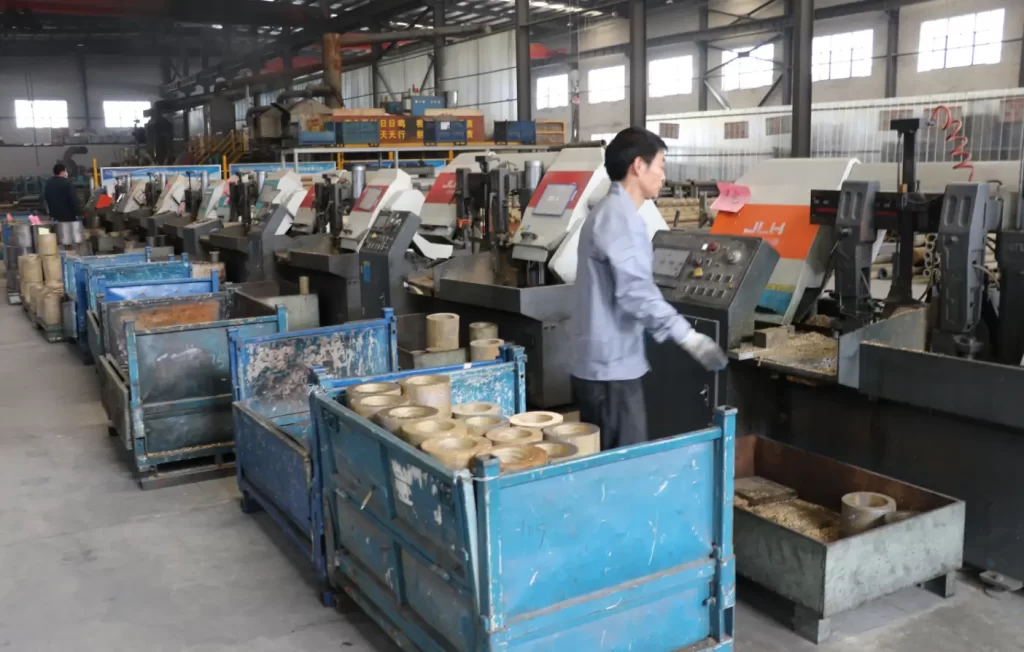
Brass vs Bronze Bushing: Differences, Properties and Best Applications
Interpretation of Bushing Knowledge

Brass vs Bronze Bushing: Differences, Properties and Best Applications

Copper-based alloys remain the predominant material family for plain bearing and bushing applications across industrial sectors. Within this category, brass and bronze represent the two primary classifications, yet their metallurgical distinctions translate to markedly different performance envelopes in service. This analysis examines the compositional, mechanical, and tribological parameters that differentiate these material classes, providing engineers and procurement specialists with the technical framework necessary for informed alloy selection. The comparative data presented herein addresses the operational considerations of load capacity, wear resistance, lubrication requirements, and cost-effectiveness that define application-specific material decisions.

Continuous Casting Machine Bushing Solutions: Engineering Guide for Steel Mills
Interpretation of Bushing Knowledge

Continuous Casting Machine Bushing Solutions: Engineering Guide for Steel Mills

In modern metallurgical operations, the continuous casting machine represents the critical interface between liquid steel refining and solid product forming. Within this sophisticated system, bushings function as indispensable tribological components that directly influence equipment reliability, product quality, and operational economy. This comprehensive technical resource examines bushing technologies deployed across continuous casting applications—from mold oscillation mechanisms to strand guide roller assemblies—providing engineers and procurement professionals with actionable intelligence for component selection and lifecycle optimization.

The Metallurgical Engineering of Bronze Sleeve Bearings: Alloy Selection, Load Dynamics, and Industrial Application
Interpretation of Bushing Knowledge

Bronze Flanged Bushings: Copper-Alloy Metallurgy, Radial Support, Thrust Control, and Reliable Procurement

A bronze flanged bushing is a sleeve bearing with an integral radial flange. The sleeve supports radial load around a shaft or pin, while the flange locates the bushing axially or carries a defined thrust load. Bronze flanged bushings are used in machinery, pumps, valves, agricultural equipment, construction equipment, marine systems, dies, conveyors, and industrial automation. The metallurgy, casting route, flange geometry, interference fit, running clearance, counterface, lubrication, sealing and inspection plan must be selected as one engineering system.

Centrifugal Cast Bronze Bushing: Copper-Alloy Metallurgy, Dense Casting Structure, Precision Machining, and Reliable Supply
Interpretation of Bushing Knowledge

Centrifugal Cast Bronze Bushing: Copper-Alloy Metallurgy, Dense Casting Structure, Precision Machining, and Reliable Supply

A centrifugal cast bronze bushing is a copper-alloy plain bearing made in a rotating mould, where molten bronze is distributed against the mould wall before solidification. The process is used for sleeves, flanged bushes, large bearing bushes, worm-shaft bushes, crusher parts, marine components, pumps, valves and high-load wear parts. A reliable bushing depends on alloy grade, melt cleanliness, pouring temperature, rotation speed, cooling, segregation control, machining allowance, shaft finish, lubrication design, fit and inspection. ASTM B271/B271M establishes requirements for copper-base alloy centrifugal castings.

Graphite Plugged Bronze Bushings: Metallurgy, Solid-Lubricant Transfer, and Heavy-Duty Sliding Performance
Interpretation of Bushing Knowledge

Graphite Plugged Bronze Bushings: Metallurgy, Solid-Lubricant Transfer, and Heavy-Duty Sliding Performance

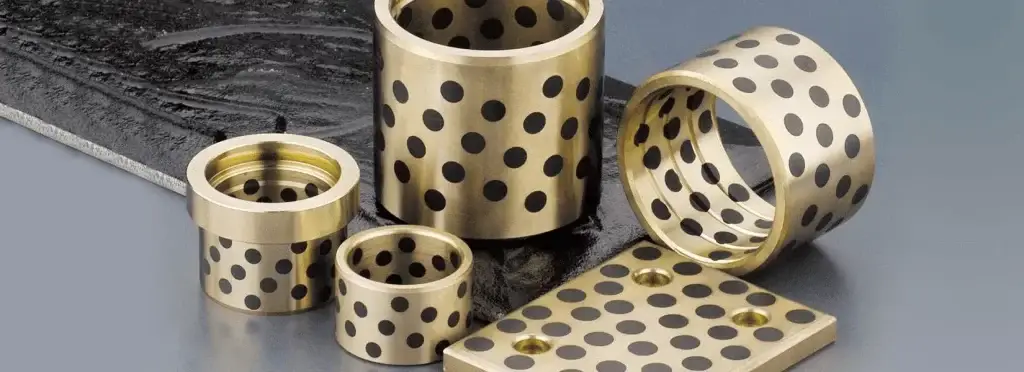
A graphite plugged bronze bushing is a cast or continuously cast bronze plain bearing with machined pockets filled by graphite or an engineered solid lubricant. The bronze matrix carries the structural load while graphite transfers a low-friction film to the shaft or guide surface. This design is valuable where grease lines are inaccessible, oil contamination is unacceptable, movement is intermittent, or heavy sliding contact makes routine relubrication unreliable. It is also called a graphite bronze bushing, solid-lubricant bronze bearing, oilless bronze bushing, or self-lubricating bronze sleeve.

Casting Bush: Cast Bronze & Brass Bushings for Industrial Applications
Interpretation of Bushing Knowledge

Casting Bush: Cast Bronze & Brass Bushings for Industrial Applications

In the world of industrial machinery, there’s a quiet workhorse that keeps countless machines running smoothly—casting bush. You might not notice it at first glance, but this small, cylindrical component plays a critical role in reducing friction, supporting heavy loads, and extending the service life of everything from tiny precision instruments to massive industrial equipment. Made primarily through centrifugal casting with copper-based alloys like bronze and brass, casting bushes (also known as cast bronze bushings, centrifugal casting bushes, or plain casting bearings) are versatile, durable, and essential for nearly every industry. This blog will break down everything you need to know about casting bushes—from how they’re made and what materials they use, to where they’re applied and why they’re superior to other bearing solutions. We’ll also share insights on choosing the right casting bush for your needs and introduce a reliable supplier, MYWAY, to help you get the best performance for your equipment.

Scroll to Top