
Recent Posts
Metallic Bushes: High-Performance Metal Bearings & Self-Lubricating Bush
Introduction
In industrial machinery, automotive systems, and heavy-duty equipment, metallic bushes (also called metal bushings, plain bearings, or sleeve bearings) are unsung heroes. These cylindrical metal components reduce friction, support heavy loads, and extend equipment lifespans—making them indispensable for rotary, oscillating, and sliding applications. From hardened steel bushes to bronze alloy sleeves and self-lubricating metal-polymer composites, metallic bushes deliver unmatched durability, cost-efficiency, and reliability across industries.
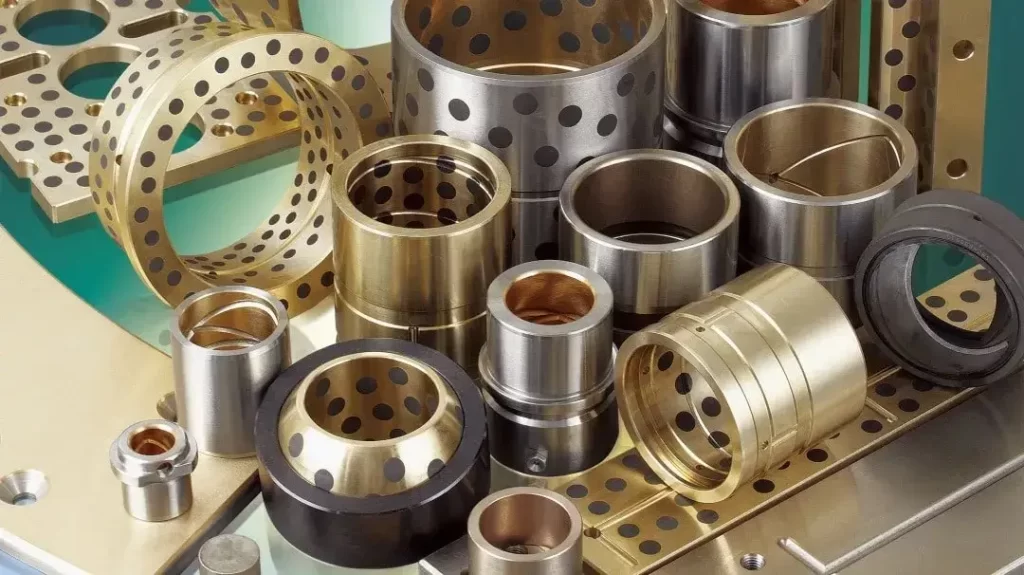
Table of Contents
1. What Are Metallic Bushes?
- Metal bushes / Metallic bushings
- Hardened steel bushes / Steel sleeve bearings
- Bronze bushes / Copper alloy bushings
- Self-lubricating metal bearings / Oil-free metallic bushes
- Bimetallic bushes / Metal-polymer plain bearings
- Flange bushes / Cylindrical metal sleeves
- Wear-resistant metal liners / Industrial metallic bearings
2. Core Advantages of Metallic Bushes
1. Unmatched Load Capacity & Durability
2. Friction Reduction & Wear Resistance
- Solid metal bushes (steel/bronze) have low friction coefficients (0.15–0.3) when lubricated, minimizing energy loss and heat buildup.
- Self-lubricating metallic bushes (PTFE-lined, graphite-embedded) eliminate the need for external oil/grease, reducing friction to near-zero in some cases.
- Hardened steel and bronze alloys resist abrasive wear, even in dusty, dirty environments where lubricants attract contaminants.
3. Adaptability to Extreme Environments
- High temperature: Steel and bronze withstand temperatures from -40°C to +300°C, maintaining structural stability without warping.
- Corrosive conditions: Bronze alloys (tin-bronze, aluminum-bronze) resist rust, saltwater, and chemical corrosion—ideal for marine, offshore, and chemical processing equipment.
- Dusty/gritty settings: Self-lubricating metallic bushes don’t rely on oil films, so they perform reliably in mining, agriculture, and construction machinery where dust would ruin lubricated bearings.
- Low-speed/oscillating motion: Metallic bushes handle slow, frequent back-and-forth movements (common in robotics, door hinges, and hydraulic cylinders) better than rolling bearings, which suffer from “false brinelling” in these applications.
4. Cost-Effectiveness & Long-Term Savings
- Low maintenance: Self-lubricating metallic bushes eliminate the need for regular oiling/greasing, cutting maintenance labor and material costs by up to 60%.
- Long lifespan: Durable metal materials mean fewer replacements, reducing downtime and production losses.
- Design simplicity: Metallic bushes remove the need for complex lubrication systems (pumps, hoses, fittings), simplifying machinery design and reducing part count.
- Reusability: Many metallic bushes (especially hardened steel) can be reconditioned or reused, further lowering costs.
5. Design Flexibility & Customization
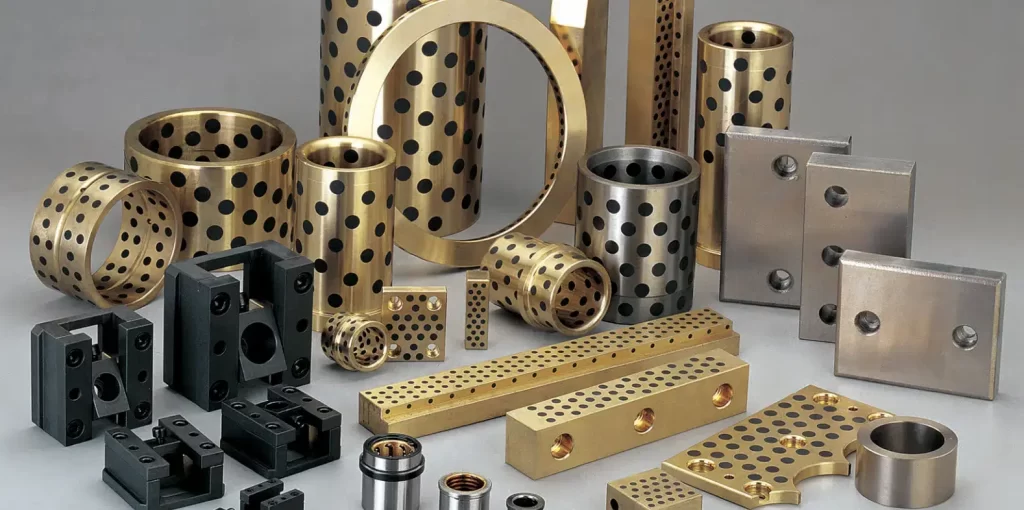
- Styles: Cylindrical, flanged, thin-walled, thick-walled, sintered, oil-impregnated.
- Materials: Hardened steel, tin-bronze, aluminum-bronze, lead-bronze, brass, and metal-polymer composites (steel back + PTFE/POM lining).
- Precision: Manufactured to tight tolerances (metric/imperial) for seamless installation and optimal performance.
6. Noise Reduction & Vibration Damping
3. Common Types of Metallic Bushes & Their Materials
1. Hardened Steel Bushes
Material: High-carbon steel or alloy steel (45#, 40Cr) heat-treated to HRC 58–62 for maximum hardness
Key benefits: Ultra-high load capacity, excellent wear resistance, low cost, easy to machine.
Best for: Heavy machinery, construction equipment, hydraulic components, automotive chassis, and high-impact applications.
2. Bronze Bushes (Copper Alloy Bushes)
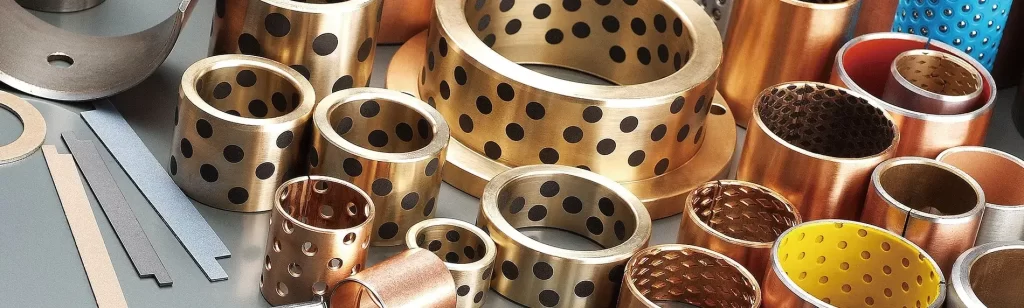
- Tin-bronze (C93200, CuSn10Pb1): Good wear resistance, self-lubricating properties, ideal for low-to-medium loads.
- Aluminum-bronze (C95400): High strength, excellent corrosion resistance, perfect for heavy loads and marine environments.
- Lead-bronze: Superior anti-friction properties, used in high-speed, high-temperature applications.
Key benefits: Self-lubricating, corrosion-resistant, good thermal conductivity, durable.
Best for: Automotive engines, marine equipment, industrial pumps, and food processing machinery.
3. Self-Lubricating Metallic Bushes
Design: Metal backing (steel/bronze) with a solid lubricant layer—either embedded graphite/MoS2 or a PTFE/POM lining.
Key benefits: Oil-free operation, maintenance-free, low friction, wide temperature range.
Best for: Hard-to-reach lubrication points, clean environments (food/medical), and extreme temperature/dust conditions.
4. Bimetallic & Metal-Polymer Bushes
Design: Two-layer construction—steel backing for strength, with a thin bronze or PTFE lining for low friction
Key benefits: Combines steel’s load capacity with bronze/PTFE’s lubrication, cost-effective, lightweight.
Best for: Automotive, agricultural, and general industrial applications where high performance meets budget constraints.
4. Top Industrial Applications of Metallic Bushes
1. Automotive Industry
- Chassis components: Suspension bushes, steering knuckle sleeves, kingpin bearings.
- Engine parts: Crankshaft bearings, connecting rod bushes, valve guides.
- Transmission: Gearbox sleeves, clutch components.
2. Construction & Heavy Machinery
- Excavators, bulldozers: Joint bearings, swing arm sleeves, bucket pin bushes.
- Cranes, forklifts: Hydraulic cylinder bushes, lifting mechanism liners.
- Concrete mixers, crushers: High-load wear-resistant sleeves.
3. Agricultural Equipment
- Tractors, harvesters: Axle bushes, linkage sleeves, PTO shaft bearings.
- Farm implements: Plow hinges, conveyor liners, seed drill components.
4. Marine & Offshore
- Ship engines: Stern tube bearings, propeller shaft sleeves.
- Offshore platforms: Corrosion-resistant bushes for cranes, valves, and winches.
5. Industrial Machinery & Automation
- Machine tools: Spindle bearings, linear guide bushes.
- Conveyors, packaging machines: Low-noise, maintenance-free sleeves.
- Robotics: Joint bearings for precise, smooth movement.
6. Renewable Energy
- Wind turbines: Pitch system bearings, main shaft sleeves.
- Solar trackers: Oscillating bushes for sun-tracking mechanisms.
7. Food & Medical Equipment
- Food processing: Stainless steel/bronze bushes compliant with FDA hygiene standards.
- Medical devices: Precision miniature bushes for surgical tools and imaging equipment.
5. Why Choose MYWAY Metallic Bushes?
1. Premium Materials & Rigorous Quality Control
2. Custom Manufacturing for Your Exact Specifications
- Metric/imperial dimensions
- Hardened steel, bronze, or self-lubricating composites
- Cylindrical, flanged, thin/thick-walled designs
- Specialized coatings (anti-corrosion, low-friction)
3. Competitive Pricing & Fast Delivery
4. Expert Technical Support
5. Global Customer Trust
6.FAQ About Metallic Bushes
Q1: What’s the difference between steel bushes and bronze bushes?
Q2: Are self-lubricating metallic bushes really maintenance-free?
Q3: Can metallic bushes be used in high-temperature applications?
Q4: What size metallic bushes can MYWAY manufacture?
Q5: How do I select the right metallic bush for my application?
Q6: What’s the typical lifespan of metallic bushes?
7. Get in Touch with MYWAY Today
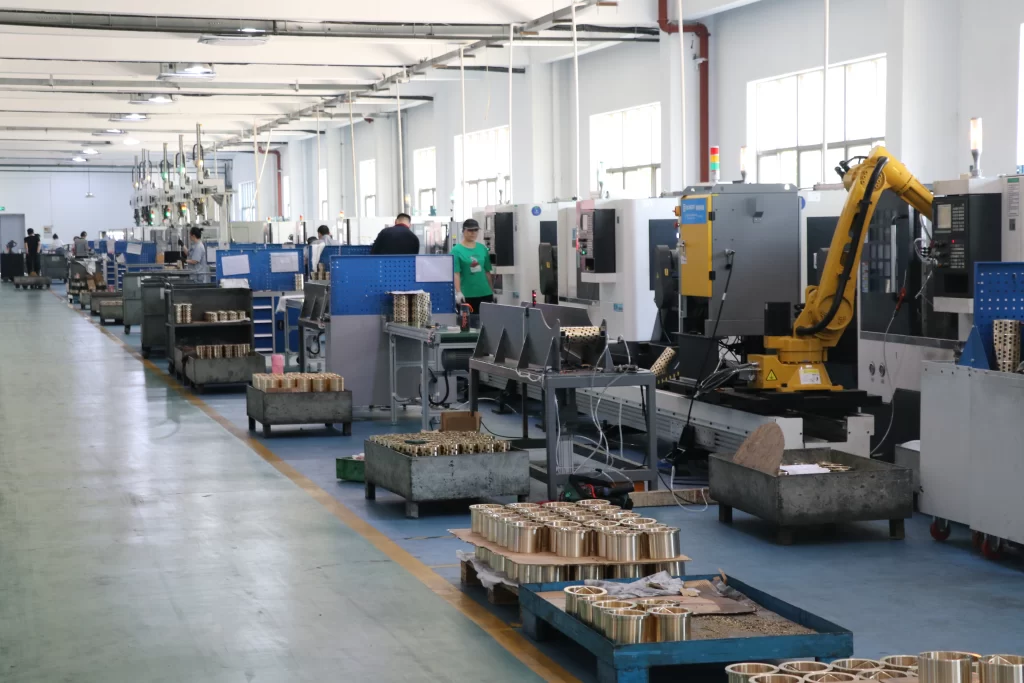
100000+ Types of Bushings – Contact Us for Details