
Recent Posts
ENGINEERING COMPOSITION OF BRONZE: METALLURGY, ALLOY SYSTEMS, AND APPLICATIONS IN HIGH-PERFORMANCE BUSHINGS
Introduction
Bronze, one of the earliest engineered alloys in human history, remains a critical material in modern mechanical engineering, particularly in the production of plain bearings, bushings, and wear-resistant components. This article provides a systematic analysis of bronze composition—primary base metals, alloying elements, and their influence on mechanical and tribological properties. The discussion includes historic context, classification of major bronze families (phosphor bronze, aluminum bronze, leaded bronze, manganese bronze, silicon bronze), comparative analysis with brass and pure copper, and the specific reasons why bronze dominates bushing and bearing applications.
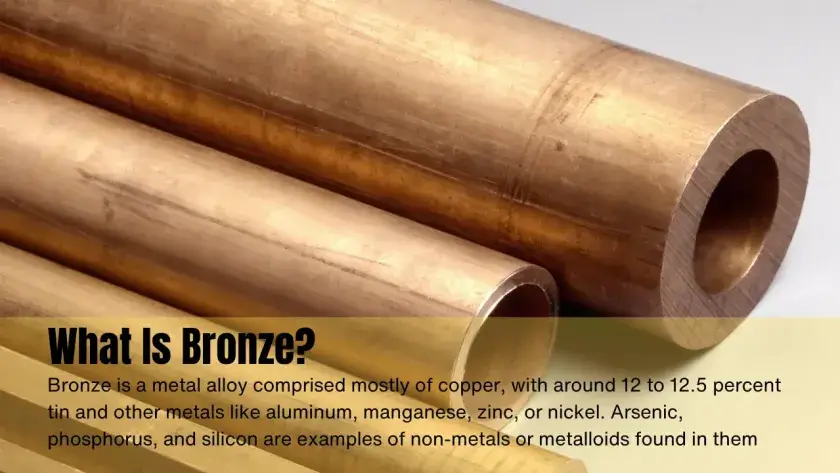
Table of Contents
1. Introduction
In industrial procurement and mechanical design, one frequently encountered question concerns the exact material composition of bronze. Unlike pure metals, bronze is a deliberate alloy, meaning its properties derive from the combination of two or more metallic elements. Understanding what bronze is made from is not merely an academic exercise—it directly affects material selection for components subject to friction, load, corrosion, and thermal cycling.
For engineers responsible for specifying bushings, bearings, thrust washers, or other sliding components, the alloy composition dictates wear resistance, load capacity, friction coefficient, compatibility with mating shafts, and maintenance requirements. This article delivers a rigorous, data-driven explanation of bronze metallurgy, with a specific focus on its role in high-reliability bushing applications.
2. Fundamental Composition of Bronze
2.1 Base Metal: Copper
All bronze alloys begin with copper (Cu) as the primary constituent. In standard industrial bronzes, copper content typically ranges from 80% to 95% by weight. Copper provides the following baseline characteristics:
Face-centered cubic (FCC) crystal structure offering good ductility and formability
High electrical and thermal conductivity (approximately 60–90% IACS for most bronzes)
Natural corrosion resistance in many environments, including atmospheric and aqueous conditions
Relatively low melting point (1084°C for pure copper), which facilitates casting
However, pure copper is too soft for load-bearing or wear-resistant applications. Its tensile strength in annealed condition is only about 200–250 MPa, and it exhibits poor galling resistance. Alloying is therefore essential.
2.2 Primary Alloying Element: Tin
Traditional bronze is defined by the addition of tin (Sn) to copper. The tin content in conventional wrought and cast bronzes ranges from 5% to 15%, with the most common general-purpose composition being approximately 88% copper / 12% tin.
The metallurgical effects of tin include:
Solid-solution strengthening: Tin atoms dissolve into the copper lattice, creating lattice strain that increases hardness and strength. Tensile strength can rise to 350–500 MPa depending on tin content and processing.
Melting point depression: The liquidus temperature drops from 1084°C (pure Cu) to about 950–1020°C for Cu-Sn alloys, improving fluidity and castability.
Reduced ductility: Increasing tin beyond 12–14% makes the alloy progressively more brittle, limiting cold workability.
Improved wear resistance: The harder matrix resists adhesive and abrasive wear mechanisms.
Historical bronze artifacts show tin contents between 5% and 14%, with higher tin (up to 20–25%) reserved for specialty applications such as bell metal, where acoustic properties dominate.
2.3 Secondary and Tertiary Alloying Elements
Modern industrial bronze is rarely limited to copper and tin. Metallurgists add controlled quantities of other elements to tailor mechanical properties, corrosion resistance, machinability, and tribological behavior. The table below summarizes the most important alloying additions.
| Element | Typical Range (% wt) | Primary Function | Relevance to Bushings |
|---|---|---|---|
| Lead (Pb) | 1–15% (often 5–10%) | Acts as a dispersed solid lubricant; improves machinability and seizure resistance | Critical for heavy-load, low-speed bushings; reduces friction and prevents galling |
| Phosphorus (P) | 0.01–0.5% | Deoxidizer; forms hard phosphide particles (Cu₃P) that increase wear resistance and fatigue strength | Used in phosphor bronze for high-cycle applications like gears and precision bushings |
| Aluminum (Al) | 6–12% | Significant solid-solution strengthening; promotes formation of protective aluminum oxide film | Excellent for marine and chemical bushings requiring corrosion resistance and high strength (up to 750+ MPa tensile) |
| Nickel (Ni) | 1–5% | Enhances strength and corrosion resistance; stabilizes the alloy structure | Added to aluminum bronzes and nickel-aluminum bronzes for propeller shaft bushings |
| Manganese (Mn) | 0.5–4% | Improves strength and deoxidation; enhances corrosion resistance in seawater | Common in manganese bronze (actually a high-strength brass but used as a bearing material) |
| Zinc (Zn) | 1–5% | Lowers cost and improves fluidity during casting | Found in architectural bronzes and some lower-cost bushings |
| Silicon (Si) | 2–5% | Increases strength and hardness; improves casting characteristics | Silicon bronze bushings used in weldable, corrosion-resistant applications |
Each addition creates a distinct alloy family with unique performance profiles, discussed in Section
3. Historical Development and Industrial Relevance
The discovery of bronze occurred circa 4500 BCE in the region of modern-day Iran. The deliberate alloying of copper with tin represented a revolutionary advance over pure copper tools, which were too soft for sustained heavy work. Bronze’s lower melting point allowed casting into complex shapes (swords, axes, vessels), while its increased hardness and edge retention made it superior to stone and pure copper.
The Bronze Age (approximately 3300–1200 BCE) saw the widespread adoption of bronze for weapons, armor, tools, and structural components across Mesopotamia, Egypt, the Indus Valley, China, and Europe. The subsequent transition to iron was driven primarily by supply disruptions in tin trade routes around 1200–1100 BCE, not by iron’s immediate superiority. Iron was abundant and cheaper, though early iron was often inferior to high-tin bronze.
Critically, bronze never disappeared. Its unique combination of corrosion resistance, low friction, and castability ensured continuous use in marine hardware, statues, musical instruments, and—most relevant to this article—bearings and bushings. By the 19th century, the Industrial Revolution created massive demand for bronze bearings in steam engines, railway rolling stock, and factory machinery, a trend that continues today.
4. Major Bronze Alloy Systems for Bushing Applications
4.1 Phosphor Bronze (Tin Bronze with Phosphorus)
Nominal composition: Cu 80–95%, Sn 1–11%, P 0.01–0.5%
Phosphorus serves two purposes: (1) deoxidation during melting, preventing gas porosity; and (2) formation of copper phosphide (Cu₃P) particles, which are extremely hard and enhance wear resistance and fatigue strength. Phosphor bronze exhibits excellent spring properties and high elastic limit.
Relevant standards: C51000 (Phosphor Bronze A, Cu 94.8%, Sn 5%, P 0.2%), C52100 (Cu 92%, Sn 8%, P 0.1–0.3%)
Bushing applications: Precision instrument bearings, high-cycle pump bushings, textile machinery, electrical contact springs, and aircraft landing gear bushings where fatigue resistance is critical.
Key advantages: High fatigue strength, good corrosion resistance, excellent spring back.
Limitations: Lower load capacity compared to leaded or aluminum bronzes; requires good lubrication.
4.2 Leaded Bronze (Leaded Tin Bronze)
Nominal composition: Cu 80–85%, Sn 5–7%, Pb 5–10%, sometimes Zn up to 3%
Lead is virtually insoluble in copper. During solidification, lead forms discrete, finely dispersed droplets throughout the copper-tin matrix. These lead particles act as built-in solid lubricants: under sliding contact, lead smears onto the mating shaft surface, reducing friction and preventing adhesive wear (galling).
Relevant standard: SAE 660 / C93200 (Cu 83%, Sn 7%, Pb 7%, Zn 3%) – the most widely used bronze bushing material in North America and Europe.
Bushing applications: Heavy-duty, low-speed, high-load bushings in construction equipment (excavator pins, bucket linkages), agricultural machinery (tractor pivot joints), and general industrial bearings.
Key advantages: Excellent anti-friction and anti-seizure properties; good conformability; reasonable cost.
Limitations: Not recommended for high-speed applications (lead droplets can soften at elevated temperatures); lead toxicity concerns in food contact or potable water applications.
4.3 Aluminum Bronze
Nominal composition: Cu 80–95%, Al 6–12%, sometimes Fe 2–5%, Ni 1–5%
Aluminum bronze is among the strongest of all copper alloys. Tensile strengths exceeding 750 MPa (109,000 psi) are achievable, comparable to medium-carbon steel. The aluminum forms a tough, adherent aluminum oxide film that provides exceptional corrosion resistance in seawater, sour gases, and many chemical environments. Additionally, aluminum bronze is non-sparking, making it safe for use in explosive atmospheres.
Relevant standard: C62400 (Cu 82–88%, Al 10–11.5%, Fe 2–4.5%)
Bushing applications: Marine propeller shaft bearings, offshore platform equipment, aerospace landing gear bushings, valve guides, and pumps handling corrosive fluids.
Key advantages: Highest strength among bronzes; excellent corrosion resistance, particularly in seawater; good wear resistance.
Limitations: More difficult to cast and machine than leaded or phosphor bronzes; higher cost.
4.4 Manganese Bronze (High-Strength Brass with Bronze Naming)
Nominal composition: Cu 55–65%, Zn 38–42%, Mn 2–4%, plus minor Fe, Sn, Al
Technically, manganese bronze is a high-strength brass because its primary alloying element after copper is zinc, not tin. However, historical naming conventions persist, and it is widely classified as a bronze in bearing catalogs. Manganese addition significantly increases strength and corrosion resistance.
Bushing applications: Heavy-duty thrust bearings, worm gears, marine propellers, and valve stems.
Key advantages: Very high strength for a copper alloy; good corrosion resistance; lower cost than aluminum bronze.
Limitations: Contains zinc (subject to dezincification in certain environments); lower corrosion resistance than aluminum bronze in aggressive media.
4.5 Silicon Bronze
Nominal composition: Cu 94–96%, Si 2–5%, plus Mn and Zn
Silicon bronze offers an excellent balance of strength, ductility, and corrosion resistance. It can be readily welded and brazed, making it suitable for fabricated bushing assemblies.
Bushing applications: Corrosion-resistant bushings in chemical plants, food processing equipment (where lead and tin restrictions apply), and architectural hardware.
Key advantages: Good strength and ductility; weldable; non-toxic.
Limitations: Lower wear resistance than leaded or phosphor bronzes; higher cost than standard brass.
5. Comparison: Bronze vs. Brass vs. Pure Copper
| Attribute | Pure Copper | Brass | Bronze |
|---|---|---|---|
| Primary composition | >99.3% Cu | Cu + Zn (5–40%) | Cu + Sn (5–15%) + optional Pb, P, Al, etc. |
| Color | Reddish | Yellow to gold | Brownish to reddish-brown |
| Hardness (Brinell) | 35–45 HB | 55–100 HB | 60–120+ HB (aluminum bronze up to 200 HB) |
| Tensile strength (MPa) | 200–250 | 300–450 | 350–750+ |
| Wear resistance | Poor | Moderate | Excellent |
| Friction coefficient (vs steel, lubricated) | 0.08–0.12 | 0.08–0.12 | 0.06–0.10 (lower with lead) |
| Corrosion resistance (seawater) | Good | Fair (dezincification risk) | Very good to excellent |
| Castability | Moderate | Excellent | Good to excellent |
| Typical bushing use | Not used | Decorative, light duty | Heavy duty, industrial bearings |
Conclusion for engineers: For any bushing application involving sustained sliding contact, moderate to high loads, or corrosive environments, bronze is the superior choice over both pure copper and brass.
6. Metallurgical Reasons Bronze Excels in Bushings and Bearings
Bronze has been the dominant material for plain bearings and bushings for over a century. The reasons are rooted in its physical and tribological properties.
6.1 Low Friction Coefficient
When a bronze bushing runs against a hardened steel shaft, the coefficient of friction under boundary lubrication typically ranges from 0.06 to 0.10. This is significantly lower than many other metallic pairs. The low friction is attributed to:
The hexagonal crystal structure of tin-rich phases, which promotes shear in the sliding direction
The presence of lead (in leaded bronzes) as a solid lubricant
Formation of stable oxide layers that prevent metal-to-metal adhesion
6.2 Excellent Wear Resistance
Bronze’s resistance to adhesive and abrasive wear stems from its composite-like microstructure. Hard intermetallic particles (Cu₃P in phosphor bronze, Al₂O₃ film in aluminum bronze, dispersed lead droplets) interrupt the contact interface, reducing material transfer. In ASTM G65 dry sand/rubber wheel abrasion tests, bronze typically shows wear rates 50–70% lower than mild steel.
6.3 Embeddability and Conformability
Unlike rolling element bearings, plain bushings must tolerate some degree of dirt, debris, and misalignment. Bronze is relatively soft compared to hardened steel, allowing hard particles to embed into the bushing surface rather than scoring the shaft. This property, known as embeddability, significantly extends system life in contaminated environments. Similarly, bronze bushings conform to minor shaft surface irregularities, distributing load more evenly.
6.4 Corrosion Resistance
Most industrial environments—humidity, process fluids, washdowns—will rapidly corrode ferrous materials. Bronze’s noble potential and protective patina (basic copper carbonate or copper oxide) provide long-term stability. Aluminum bronze, in particular, resists pitting and crevice corrosion in seawater, making it the standard material for marine shaft bushings.
6.5 Self-Lubricating Capability
Two specific bronze forms enable maintenance-free operation:
Oil-impregnated porous bronze: Sintered bronze bushings are manufactured with controlled porosity (typically 15–25% by volume). Vacuum impregnation introduces lubricating oil into these pores. Under rotation, heat and centrifugal force release oil to the bearing surface. This technology (Oilite® and similar) provides thousands of hours of operation without external lubrication.
PTFE-lined or plugged bronze: Solid lubricant (PTFE, graphite, or MoS₂) is mechanically retained in the bronze surface. Transfer films form on the mating shaft, yielding friction coefficients as low as 0.02–0.05.
6.6 Cost-Effectiveness Over Life Cycle
Although initial material cost of bronze exceeds that of cast iron or some plastics, its longer service life, reduced downtime, and lower maintenance requirements often result in lower total cost of ownership (TCO). In heavy equipment applications, replacing a bronze bushing every two years versus a steel-on-steel joint every six months is a substantial operational saving.
7. MYWAY Precision Bronze Bushings: Engineering Solutions for Demanding Applications
7.1 Product Range
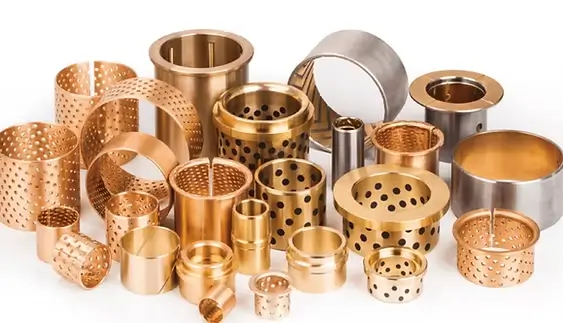
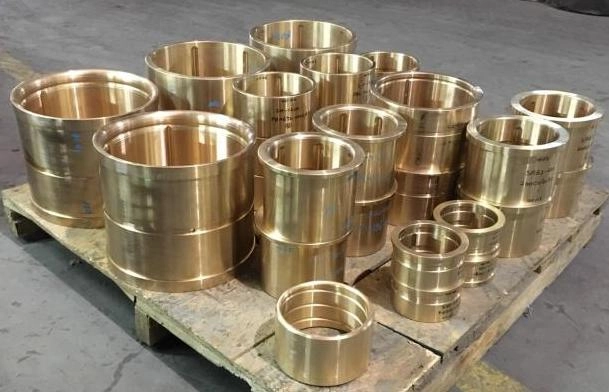
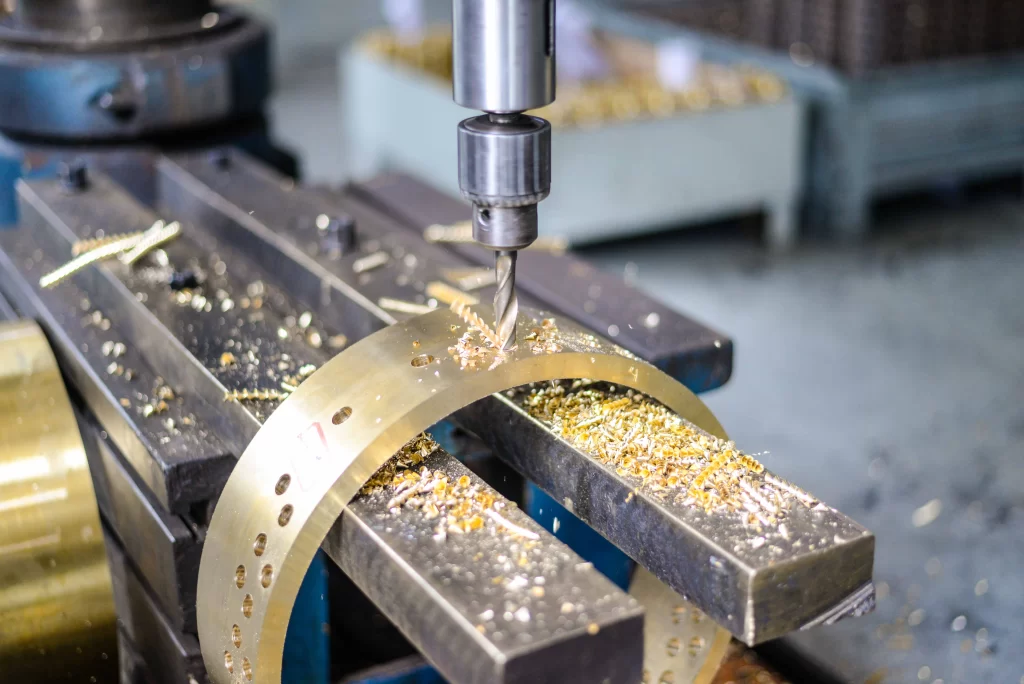
Wrapped bronze bushings: Manufactured from high-density copper alloy strip, rolled into cylindrical form. Available with diamond-shaped or hemispherical oil pockets, axial lubrication grooves, and distributed lubrication holes. Features include high load capacity, excellent wear resistance, and extended service life.
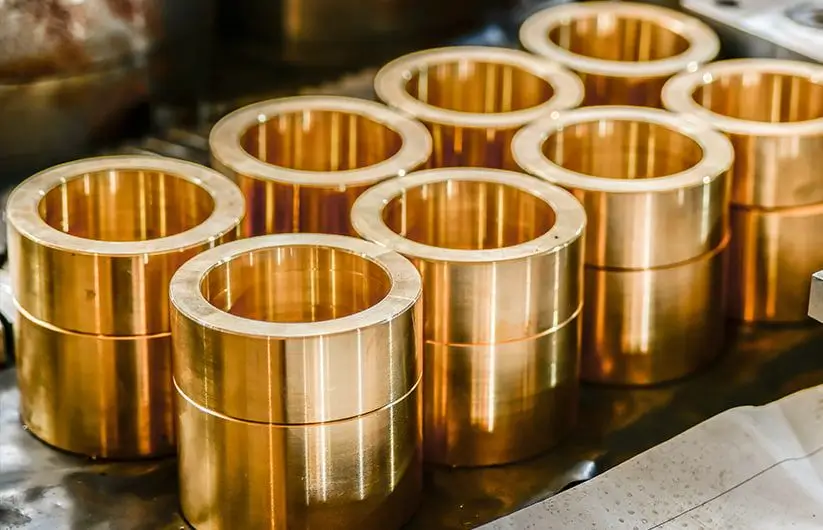
Solid bronze bushings: Machined from centrifugally cast or continuously cast bronze bar stock. Suitable for heavy-wall, high-load, and low-speed applications. Standard alloys include SAE 660 (C93200) leaded bronze, C51000 phosphor bronze, and C95400 aluminum bronze.
PTFE self-lubricating bronze bushings: PTFE plugs or a PTFE composite liner embedded into a bronze backing. Permanent lubrication for the life of the bearing—no grease fittings, no scheduled relubrication. Ideal for inaccessible locations, clean environments (food/pharma), and high-temperature conditions.
DU-type composite bushings: Three-layer construction—steel backing, sintered bronze interlayer, and PTFE/lead overlay. Transfers a solid lubricant film to the mating shaft. Achieves friction coefficients of 0.02–0.08 under dry or boundary conditions. Designed for maintenance-free operation under high loads and moderate speeds.
7.2 Custom Engineering Capabilities
MYWAY does not offer only standard sizes. The company’s engineering team works directly with customers to:
Select the optimal bronze alloy based on load, speed, temperature, lubrication method, and environmental conditions.
Design custom geometries (flanged bushings, thrust washers, spherical bearings, half-shells).
Incorporate features such as oil grooves, chamfers, ID/OD profiles, and mounting holes.
Validate designs through FEA and prototype testing.
7.3 Quality and Compliance
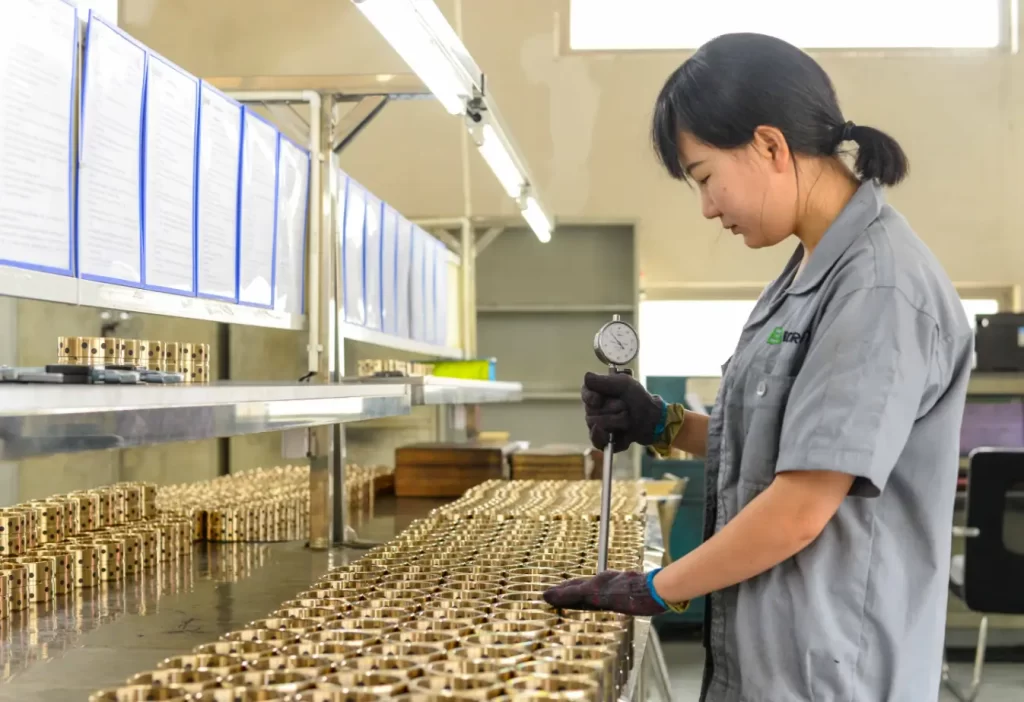
All MYWAY bronze bushings are produced in accordance with ISO 9001 standards. Alloy compositions are verified by optical emission spectrometry (OES). Dimensional tolerances are held to ISO 286 or customer-specific requirements.
7.4 Why Choose MYWAY
Alloy expertise: Not all bronze is the same. MYWAY guides customers to the correct alloy—SAE 660 for heavy loads, C51000 for high-cycle wear, C95400 for corrosion, and DU composites for maintenance-free operation.
Supply chain reliability: Consistent material sourcing and finished stock availability minimize lead times.
Technical support: Pre-sales and after-sales engineering assistance, including failure analysis and replacement recommendations.
Global shipping: MYWAY ships to industrial clients worldwide.
For inquiries, quotations, or technical consultation:
Website: www.mybushing.com
Email: ivan@mybushing.com
8. Frequently Asked Questions (FAQ)
Q1: What is the exact chemical composition of standard bronze?
A: General-purpose bronze (e.g., SAE 660) contains approximately 83% copper, 7% tin, 7% lead, and 3% zinc. Other alloys vary: phosphor bronze C51000 has 94.8% Cu, 5% Sn, 0.2% P; aluminum bronze C95400 has 85% Cu, 11% Al, 4% Fe.
Q2: How does the tin content affect bronze properties?
A: Tin increases hardness, strength, and wear resistance but reduces ductility. Below 5% tin, bronze is relatively soft; 5–10% tin offers a balance of strength and ductility; 12–15% tin yields high hardness and wear resistance but limited cold workability; above 15% tin, bronze becomes brittle and is typically used only for cast applications like bells.
Q3: Can bronze bushings run without any external lubricant?
A: Conventional solid bronze bushings require external lubrication (oil or grease) for extended operation. However, oil-impregnated porous bronze bushings and PTFE-lined bronze bushings are specifically designed for maintenance-free, self-lubricating operation. MYWAY offers both types.
Q4: Why is lead added to bronze for bushings?
A: Lead acts as a solid lubricant. It forms discrete, soft particles dispersed in the copper-tin matrix. Under sliding contact, lead smears onto the mating surface, reducing friction and preventing galling. Leaded bronze (e.g., SAE 660) is the standard material for heavy-duty, low-speed bushings.
Q5: Is bronze resistant to seawater corrosion?
A: Yes. Aluminum bronze (C95400, C95500) and manganese bronze provide exceptional resistance to seawater corrosion, including resistance to pitting, crevice corrosion, and stress corrosion cracking. These alloys are widely specified for marine propeller shaft bushings, rudder bearings, and offshore platform components.
Q6: What is the difference between a bronze bushing and a bronze bearing?
A: In plain bearing terminology, a bushing is a type of bearing—specifically, a cylindrical sleeve that fits between a shaft and a housing. The terms are often used interchangeably, but “bushing” typically implies a removable, replaceable sleeve, while “bearing” may refer to the entire assembly.
Q7: How do I select the right bronze alloy for my bushing application?
A: Selection depends on operating conditions:
High load, low speed, marginal lubrication → Leaded bronze (SAE 660 / C93200)
High cycle count, good lubrication → Phosphor bronze (C51000, C52100)
Seawater or chemical exposure → Aluminum bronze (C95400)
Maintenance-free, inaccessible location → Oil-impregnated or PTFE-lined bronze
Contact MYWAY for a free alloy selection consultation.
Q8: Are there any environmental or regulatory concerns with leaded bronze?
A: Leaded bronze is restricted in certain applications such as potable water systems, food processing equipment, and some medical devices (RoHS, ELV, WEEE directives restrict lead content >0.1% in such cases). For these applications, MYWAY offers lead-free alternatives including aluminum bronze, silicon bronze, and PTFE-lined bushings.
Q9: What is the typical lifespan of a bronze bushing?
A: Lifespan varies widely based on load, speed, lubrication, alignment, and contamination. In well-designed, lubricated applications, bronze bushings often exceed 20,000–50,000 operating hours. Many heavy-equipment bushings are replaced only during major overhauls after 5–10 years of service. MYWAY can provide estimated service life based on your specific parameters.
Q10: Does MYWAY manufacture custom non-standard bronze bushings?
A: Yes. MYWAY specializes in custom engineering. Provide drawings, sample parts, or operating requirements; the engineering team will produce bushings to your exact specifications—any alloy, any geometry, any quantity from prototypes to full production runs.
9. Conclusion
Bronze is fundamentally an alloy of copper and tin, with optional additions of lead, phosphorus, aluminum, nickel, manganese, zinc, or silicon. Each alloying element modifies the material’s mechanical, tribological, and corrosion properties to suit specific engineering demands. For bushing and bearing applications, bronze offers an unmatched combination of low friction, high wear resistance, embeddability, corrosion resistance, and the ability to incorporate solid lubricants for maintenance-free operation.
From the Bronze Age to the age of wind turbines, automated manufacturing lines, and offshore drilling rigs, bronze has proven its value as a reliable, cost-effective bearing material. The modern engineer has a wide palette of bronze alloys available, each precisely formulated for a given load, speed, and environment.
MYWAY stands ready to assist with expert alloy selection, precision manufacturing, and custom engineering. Whether the requirement is a standard SAE 660 bushing, a high-strength aluminum bronze sleeve, or a self-lubricating PTFE-lined component, MYWAY delivers solutions that reduce downtime and lower total cost of ownership.
Contact MYWAY today for a quote or technical consultation.
100000+ Types of Bushings – Contact Us for Details