
Recent Posts
Bronze Bushings: The Engineering Workhorse for Heavy-Duty Industrial Applications
Introduction
In the realm of mechanical engineering and industrial machinery, few components are as essential yet understated as the bronze bushing. These cylindrical plain bearings serve as the silent backbone of countless mechanical systems, enabling smooth rotational and linear motion while protecting valuable equipment from premature wear and failure. From the towering cranes at construction sites to the precision instruments in aerospace engineering, bronze bushings are indispensable across virtually every industrial sector
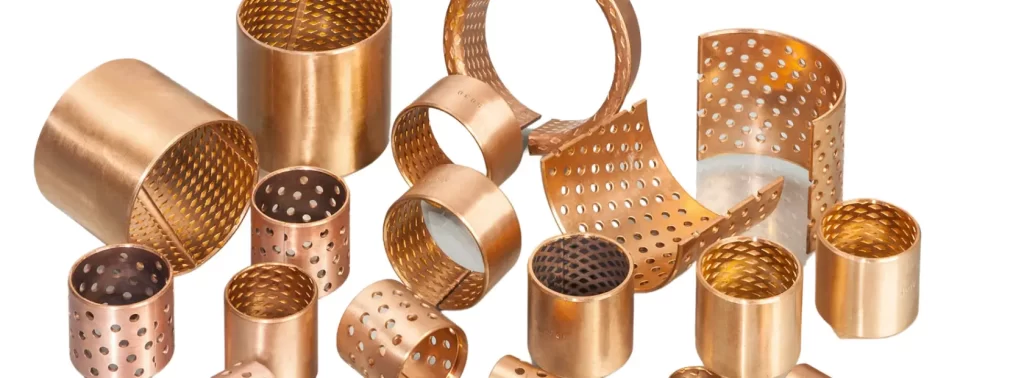
Table of Contents
1. Understanding the Bronze Bushing: Definition and Core Function
A bronze bushing is a type of plain bearing—also known as a sleeve bearing—manufactured from copper-tin alloy compositions that deliver exceptional mechanical properties. Unlike rolling-element bearings that utilize balls or rollers, bronze bushings operate on the principle of sliding contact, where the bushing surface provides a low-friction interface between moving components.
The primary function of a bronze bushing is threefold: to reduce friction between rotating or sliding shafts and their housings, to absorb and distribute radial and axial loads across a broad surface area, and to protect the mating shaft from wear and damage. By distributing loads over a larger surface area compared to point-contact bearings, bronze bushings significantly reduce localized stress concentrations and extend the service life of both the bushing and the shaft–.
Bronze bushings are particularly valued for their ability to operate under high-load, low-to-medium speed conditions where rolling-element bearings would be overspecified or impractical. Their robust construction and inherent material properties make them the preferred choice for demanding industrial environments where reliability and durability are paramount.
2. Key Functional Attributes of Bronze Bushings
The functional superiority of bronze bushings stems from the unique combination of material properties inherent to bronze alloys.
Exceptional Wear Resistance: Bronze exhibits outstanding resistance to abrasive wear, making it ideal for applications involving continuous sliding contact. The material’s ability to maintain dimensional stability under friction ensures consistent performance over extended operational periods.
Superior Corrosion Resistance: Bronze naturally resists corrosion from moisture, chemicals, and atmospheric exposure. This property makes bronze bushings particularly suitable for applications in humid environments, outdoor installations, and marine settings where saltwater exposure is a concern.
High Load-Bearing Capacity: Bronze alloys deliver impressive mechanical strength, enabling bushings to support substantial radial and axial loads without deformation. The material’s compressive strength ensures structural integrity even under extreme pressure conditions.
Excellent Heat Dissipation: Bronze’s thermal conductivity allows efficient heat transfer away from friction zones, preventing overheating and maintaining optimal operating temperatures. This characteristic is critical in high-speed or continuous-operation applications.
Self-Lubricating Capabilities: Certain bronze bushing variants—particularly sintered and oil-impregnated types—incorporate lubricant within their porous structure, enabling maintenance-free operation. This eliminates the need for external lubrication in many applications.
Dimensional Stability: Bronze maintains its shape and tolerances across a wide temperature range, ensuring consistent performance and predictable clearances
3. Common Types of Bronze Bushings
Bronze bushings are available in multiple configurations, each designed for specific operational requirements and application conditions.
Sintered Bronze Bushings: Manufactured from powdered bronze that is compressed and heated to form a porous matrix, these bushings are impregnated with lubricating oil. The oil is released during operation, providing continuous self-lubrication. Sintered bronze bushings are ideal for applications where maintenance access is limited or where external lubrication is impractical.
Cast Bronze Bushings: Produced through traditional casting methods, these solid bushings offer the highest load capacity and greatest durability among bronze bushing types. They are commonly employed in heavy machinery, hydraulic systems, and pump mechanisms where extreme forces are encountered.
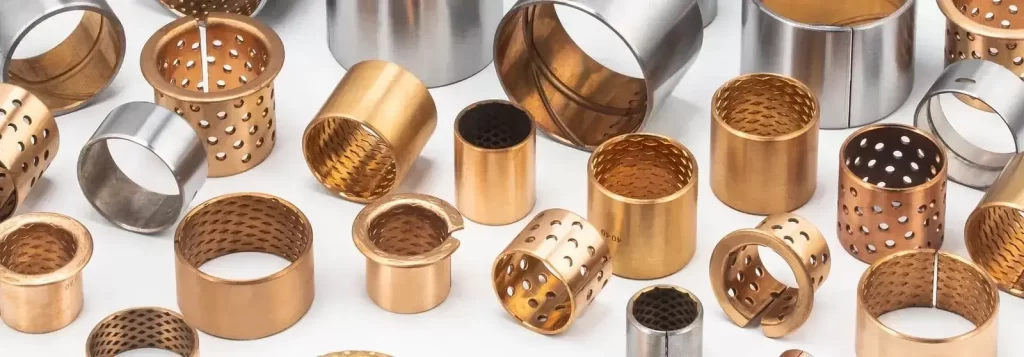
Wrapped Bronze Bushings: Formed from cold-rolled bronze sheet material, wrapped bushings provide a cost-effective solution for applications with less critical tolerance requirements. Despite their thinner wall construction, they deliver excellent load capacity and corrosion resistance.
Flanged Bronze Bushings: Featuring an integral flange at one end, these bushings accommodate both radial and axial loads while simplifying installation and positioning. The flange serves as a thrust surface, eliminating the need for separate thrust washers in many applications.
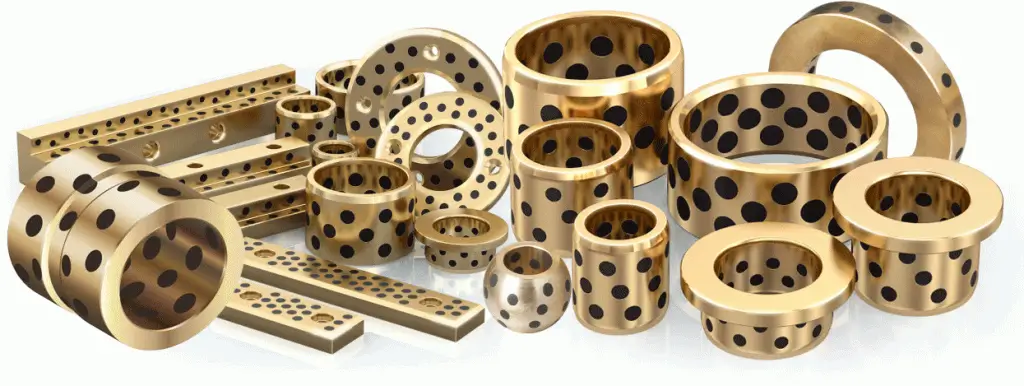
Graphite-Plugged Bronze Bushings: These specialized bushings incorporate solid graphite lubricant plugs within the bronze matrix. The graphite provides continuous lubrication even at elevated temperatures where conventional lubricants would break down, making them suitable for high-temperature and hard-to-lubricate applications.
Oil-Impregnated Bronze Bushings: Similar to sintered types, these bushings are manufactured with controlled porosity and vacuum-impregnated with lubricating oil. They provide maintenance-free operation in applications involving high speeds or variable loads
4. Core Advantages Over Alternative Materials
When compared to other bushing materials, bronze demonstrates clear performance advantages that justify its widespread adoption.
Bronze vs. Steel Bushings: While steel offers greater absolute strength, bronze provides superior corrosion resistance and better emergency running properties—the ability to operate temporarily without lubrication. Bronze’s lower coefficient of friction reduces wear on mating shafts, and its excellent machinability allows for precise dimensional control.
Bronze vs. Plastic/Polymer Bushings: Although plastic bushings may have lower initial costs, bronze delivers significantly higher load capacity, broader temperature tolerance, and substantially longer service life. Bronze’s mechanical strength and wear resistance make it the superior choice for demanding applications, while its recyclability offers environmental advantages over most plastics.
Bronze vs. Brass Bushings: Bronze is harder and stronger than brass, making it less prone to deformation or breakage under load. While brass may be suitable for lighter-duty applications, bronze is the preferred material where durability and load-bearing capacity are critical.
Cost-Effectiveness Over Time: Although bronze bushings may have higher upfront costs compared to some alternatives, their extended service life, reduced maintenance requirements, and minimized downtime result in lower total cost of ownership
5. Major Application Industries and Use Cases
Bronze bushings find application across an extraordinarily broad spectrum of industries and equipment types.
Industrial Machinery
Bronze bushings are critical components in manufacturing equipment including presses, milling machines, lathes, and material handling systems. They are employed at pivot points, rotating shafts, and articulation joints where reliable low-friction movement under heavy loads is essential. The precision and efficiency of manufacturing processes depend significantly on the performance of these unsung components.
Construction and Heavy Equipment
Excavators, loaders, cranes, and bulldozers rely extensively on bronze bushings in their undercarriage components, boom pivots, and hydraulic cylinder mountings. The ability of bronze bushings to withstand shock loads, vibration, and contaminated environments makes them indispensable in construction applications.
Automotive Industry
The automotive sector utilizes bronze bushings in suspension systems, including sway bars, control arms, and suspension linkages. Bronze bushings deliver improved handling characteristics and ride comfort by providing resilience under heavy loads while dampening vibrations. They are also employed in engine components, steering systems, and drivetrain applications.
Aerospace
Aerospace applications demand the highest levels of reliability, and bronze bushings deliver consistent performance under extreme conditions. They are used in flight control systems, control surfaces, landing gear assemblies, and other critical aircraft components where wide temperature fluctuations and high speeds are encountered.
Marine and Offshore
The marine industry depends on bronze bushings for deck equipment, steering mechanisms, and propulsion systems. Bronze’s exceptional corrosion resistance in saltwater environments ensures long service life and reliable operation in one of the most demanding application environments.
Mining and Mineral Processing
Crushers, conveyors, and processing equipment in the mining industry utilize bronze bushings extensively. The ability to withstand high-impact forces, abrasive conditions, and heavy loads makes bronze the material of choice for these demanding applications.
Energy and Power Generation
Wind turbines employ bronze bushings in gearbox assemblies, yaw mechanisms, and blade pitch systems. Hydroelectric power plants rely on bronze bushings to support turbine shafts. The wear resistance and durability of bronze ensure reliable performance under continuous movement and challenging environmental conditions.
Agricultural Equipment
Tractors, harvesters, and other agricultural machinery depend on bronze bushings for reliable operation in dusty, dirty, and demanding field conditions. Bronze’s resistance to contamination and ability to operate without frequent lubrication are particularly valued in agricultural applications
6. Bronze Bushings vs. Rolling-Element Bearings: A Strategic Comparison
Understanding when to specify bronze bushings versus rolling-element bearings is essential for optimal mechanical design.
Load Distribution: Bronze bushings distribute loads over the entire contact surface area, reducing localized stress concentrations. Rolling-element bearings concentrate loads at discrete contact points, which can lead to premature failure under shock loading conditions.
Contamination Tolerance: Bronze bushings are significantly more tolerant of contamination from mud, water, and grit than precision rolling-element bearings. The close-tolerance internal geometry of rolling-element bearings is easily damaged by foreign particles, whereas bronze bushings can accommodate some contamination without catastrophic failure.
Cost and Complexity: Bronze bushings typically cost a fraction of equivalent rolling-element bearings and are simpler to install, replace, and source. Their straightforward design eliminates the need for complex mounting arrangements and specialized installation tools.
Space Efficiency: Bronze bushings allow for more compact mounting schemes compared to rolling-element bearings, which require additional space for housings and retention mechanisms.
Maintenance Requirements: While rolling-element bearings generally require periodic relubrication and inspection, many bronze bushing variants—particularly sintered and oil-impregnated types—offer maintenance-free operation
7. Installation and Maintenance Considerations
Proper installation and maintenance practices are critical to maximizing the performance and service life of bronze bushings.
Installation Best Practices: Bronze bushings should be installed with appropriate press-fit tolerances to ensure proper retention without excessive interference that could cause deformation. The bushing bore and shaft should be clean and free from burrs or damage prior to installation. Proper alignment during installation prevents uneven wear and premature failure.
Lubrication Requirements: While many bronze bushings offer inherent self-lubrication, additional lubrication may be necessary for high-speed or high-load applications. The selection of appropriate lubricant—considering operating temperature, speed, load, and environmental conditions—is crucial for optimal performance.
Inspection and Monitoring: Regular inspection for signs of wear, including excessive clearance, scoring, or discoloration, enables timely replacement before catastrophic failure occurs. Monitoring operating temperatures and vibration levels can provide early warning of developing issues.
8. Material Selection: Choosing the Right Bronze Alloy
The performance characteristics of a bronze bushing are largely determined by its alloy composition.
Aluminum Bronze: Offers high strength and exceptional corrosion resistance, particularly in seawater and marine environments. Suitable for heavy-duty applications requiring maximum durability.
Phosphor Bronze: Contains tin and phosphorus, providing good strength, toughness, and low friction characteristics. Ideal for applications requiring fatigue resistance and consistent performance.
SAE 660 Bearing Bronze: A common choice for general bearing applications, offering excellent wear resistance and good machinability. Suitable for moderate to heavy loads at normal to relatively high speeds.
Nickel Aluminum Bronze: Delivers exceptional corrosion resistance, particularly in industrial and marine environments, combined with high strength. Used in demanding applications where both strength and corrosion resistance are required.
Silicon Bronze: Provides excellent corrosion resistance and maintains strength at elevated temperatures. Suitable for high-temperature applications and environments requiring superior corrosion protection.
Manganese Bronze: Offers high strength for high-load, high-speed applications. Provides excellent mechanical properties where maximum load capacity is required.
MYWAY Bronze Bushings: Engineered for Excellence
At MYWAY, we specialize in transforming premium bronze and brass into precision-engineered bushings, bearings, and custom components trusted by global industries. As a mature bushing production factory, MYWAY provides various types of bushings perfectly suitable for Caterpillar, Komatsu, Volvo CE, Sandvik, Metso, and other major equipment brands.
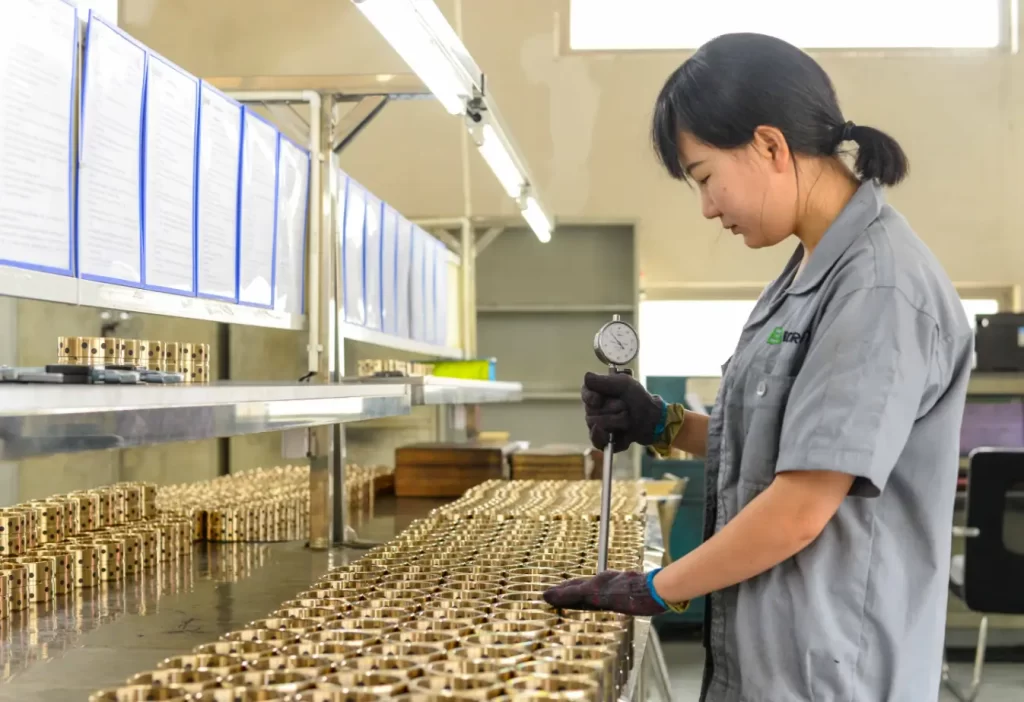
Comprehensive Product Portfolio: MYWAY offers an extensive range of bushing solutions including composite bushings, bimetal bushings, wrapped bronze bushings, graphite-plugged bushings, specialty copper bushings, steel bushings, and powder metallurgy bushings. Our wrapped bronze bearings are manufactured from high-density copper alloy (CuSn8P) and can be customized with surface patterns including diamond or hemispherical oil pockets, lubrication grooves, or uniformly distributed lubrication holes.
Self-Lubricating Technologies: MYWAY graphite dry bushings are self-lubricating bearings that eliminate the need for external oil or grease, combining a strong bronze or brass matrix with embedded solid graphite plugs that continuously release lubricant during operation. MYWAY PTFE bronze bushings are completely self-lubricating, with PTFE plugs or liners providing permanent lubrication for the life of the bearing. These maintenance-free solutions reduce labor costs, eliminate downtime for lubrication, and minimize the risk of human error.
Application-Specific Engineering: MYWAY’s composite solutions are engineered to solve modern challenges of maximum uptime, zero maintenance, and extreme durability. Our products feature resistance to mud and sand wear, high load-bearing capacity, and easy replacement. MYWAY composite bushings are often designed as drop-in replacements for standard bronze sizes, facilitating seamless integration into existing equipment.
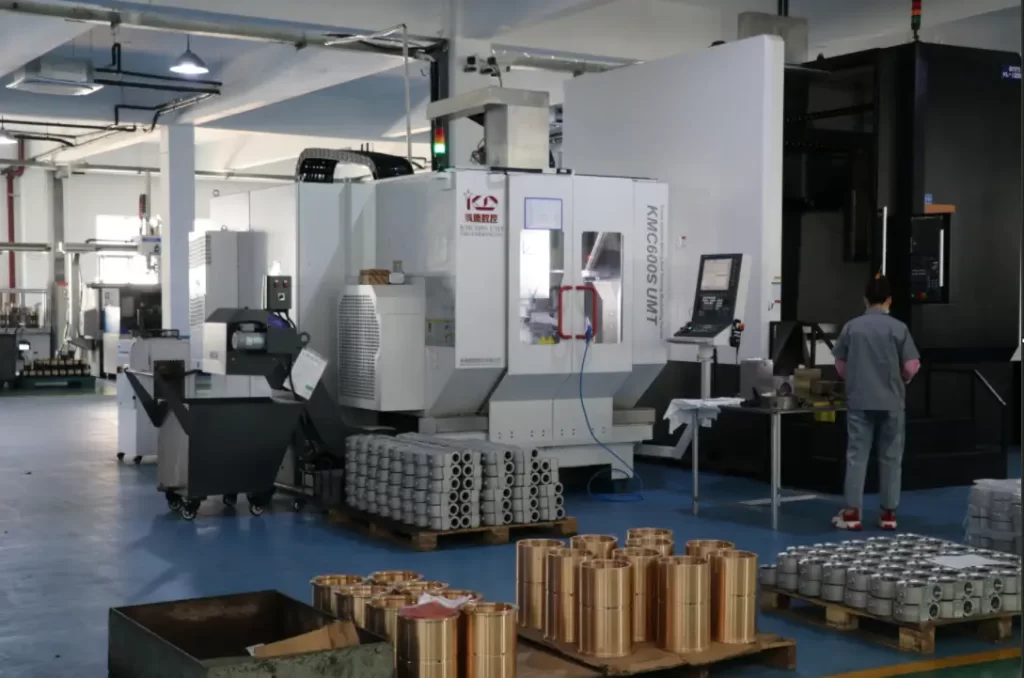
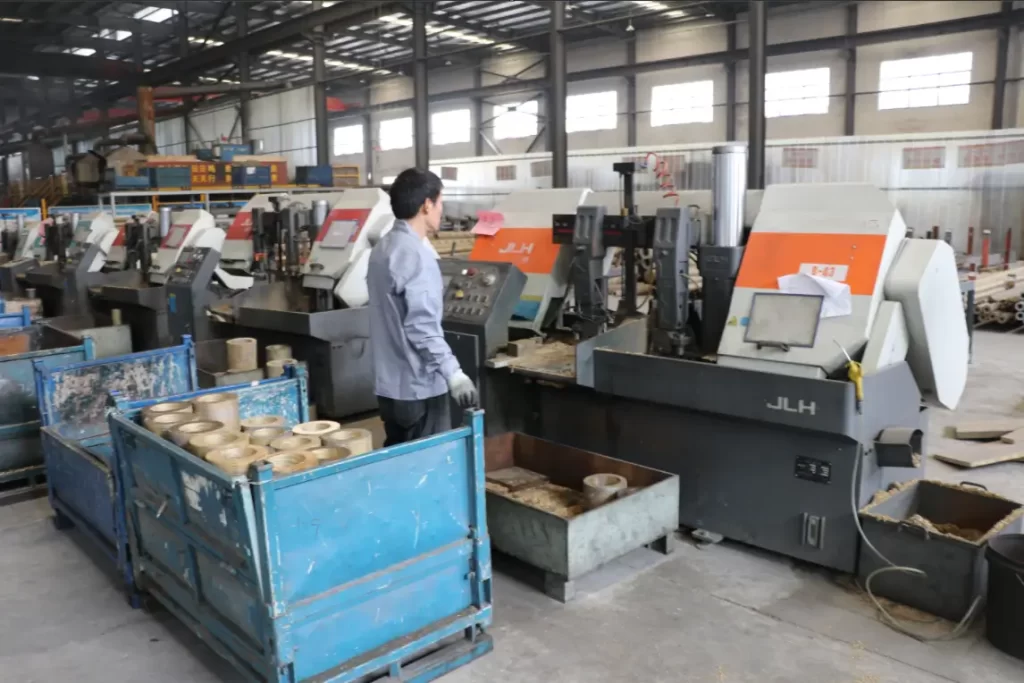
Quality and Reliability: All MYWAY products are manufactured from high-grade copper alloys, ensuring reliable performance in harsh conditions and reducing the need for frequent replacements. With over 2,000 bushing molds and three production bases, MYWAY delivers consistent quality and rapid response to customer requirements.
Cost-Effective Performance: While bronze may have higher initial cost compared to brass, MYWAY’s engineered solutions deliver superior total cost of ownership through extended service life, reduced maintenance requirements, and minimized downtime. Our comprehensive understanding of material properties and application requirements enables us to recommend the optimal solution for each unique operating condition.
Frequently Asked Questions
Q1: What is the difference between a bronze bushing and a bronze bearing?
While the terms are often used interchangeably, a bushing is technically a specific type of plain bearing—a cylindrical sleeve that provides a bearing surface between moving parts. Bronze bushings are simpler in design than rolling-element bearings and distribute loads over a larger surface area.
Q2: Are bronze bushings self-lubricating?
Certain types of bronze bushings are self-lubricating—particularly sintered bronze and oil-impregnated variants. These bushings contain lubricant within their porous structure that is released during operation. However, not all bronze bushings are self-lubricating; some require external lubrication depending on the application conditions.
Q3: How long do bronze bushings last?
The service life of a bronze bushing depends on operating conditions including load, speed, temperature, lubrication, and environmental factors. Under proper conditions, bronze bushings can provide years of reliable service. Regular inspection and timely replacement when wear is detected prevent unexpected failures.
Q4: Can bronze bushings be used in high-temperature applications?
Yes, bronze bushings maintain their mechanical properties across a wide temperature range. Graphite-plugged bronze bushings are specifically designed for high-temperature applications where conventional lubricants would break down.
Q5: Are bronze bushings better than steel bushings?
Bronze offers superior corrosion resistance and better emergency running properties compared to steel. While steel provides greater absolute strength, bronze’s lower coefficient of friction reduces wear on mating shafts. The choice depends on the specific application requirements.
Q6: What industries use bronze bushings?
Bronze bushings are used across virtually every industrial sector, including aerospace, agriculture, automotive, construction, energy, fluid power, marine, mining, oil and gas, primary metal, and railway industries.
Q7: Do bronze bushings require maintenance?
Maintenance requirements depend on the bushing type. Self-lubricating and oil-impregnated bronze bushings offer maintenance-free operation. Other types may require periodic lubrication and inspection.
Q8: Can bronze bushings be customized to specific dimensions?
Yes, bronze bushings can be manufactured to custom dimensions and configurations to meet specific application requirements. MYWAY offers custom engineering services for unique application needs.
Q9: What is the cost of bronze bushings compared to other bearing types?
Bronze bushings generally cost significantly less than equivalent rolling-element bearings. While upfront costs may be higher than some plastic alternatives, bronze’s longer service life and reduced maintenance requirements result in lower total cost of ownership.
Q10: How do I choose the right bronze bushing for my application?
Selection depends on load requirements, operating speed, temperature range, environmental conditions, and maintenance accessibility. Consulting with experienced manufacturers like MYWAY ensures optimal material and configuration selection for specific application needs
100000+ Types of Bushings – Contact Us for Details