
Recent Posts
Bush Mechanical Components: The Essential Guide to Functions, Applications, and Selection
Introduction
In the realm of mechanical engineering and industrial equipment, few components are as fundamental yet frequently overlooked as the mechanical bushing. A mechanical bush—also referred to as a sleeve bearing, plain bearing, or journal bearing—is a cylindrical lining inserted between a shaft and its housing to reduce friction, absorb impact, support moving parts, and extend the service life of critical machinery. While rolling element bearings rely on balls or rollers to facilitate motion, bushings operate on sliding friction, making them exceptionally well-suited for low-speed, high-load, high-vibration, and harsh environmental conditions
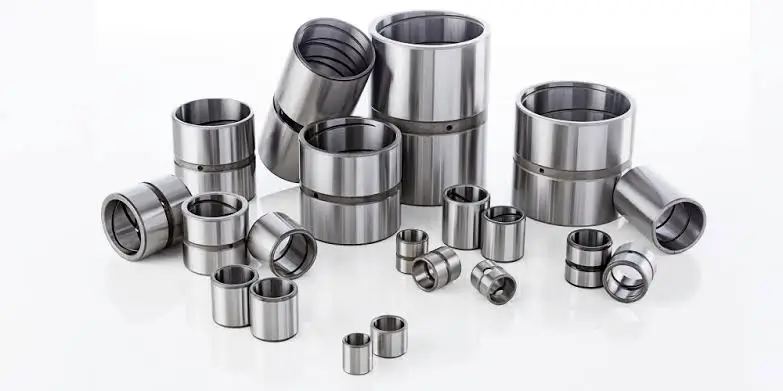
Table of Contents
1. Understanding the Mechanical Bushing: Core Functions and Operating Principles
A mechanical bushing serves as a replaceable liner and bearing surface within mechanical assemblies. Installed between a rotating, reciprocating, or pivoting shaft and its housing, the bushing performs several critical functions: reducing friction between sliding surfaces, absorbing impact loads, resisting abrasion, maintaining precise alignment, and protecting the housing from wear.
Unlike rolling-element bearings that use moving parts to reduce friction, a plain bushing creates a low-friction sliding interface directly between the shaft and the bearing surface. This fundamental difference confers distinct advantages: bushings handle heavy loads and shock loading exceptionally well due to their large contact area, operate quietly without rolling elements, require minimal radial space for compact machine designs, and offer predictable wear patterns for reliable maintenance scheduling. When properly specified and maintained, bushings provide a long service life that often exceeds that of comparable rolling-element bearings in demanding applications
2. Classification of Mechanical Bushings: Types and Material Families
The diversity of industrial applications has driven the development of numerous bushing types, each optimized for specific operating conditions. Understanding these classifications is essential for proper component selection.
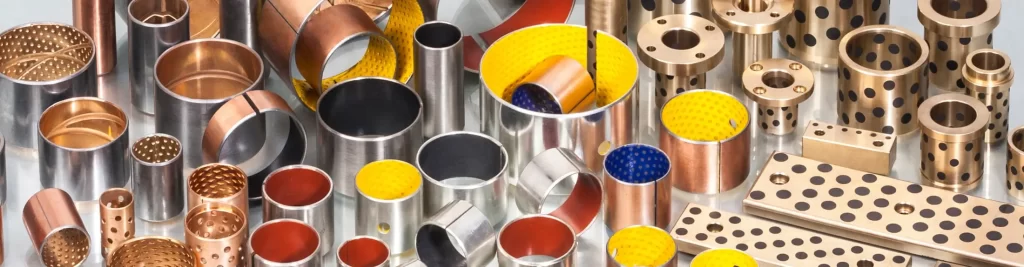
Plain (Sleeve) Bushings represent the most basic type—a straight cylindrical sleeve without flanges, designed for general shaft support where axial location is handled by other components. Flanged Bushings incorporate an integral collar at one end, supporting both radial loads and light axial thrust loads while aiding in easy positioning.
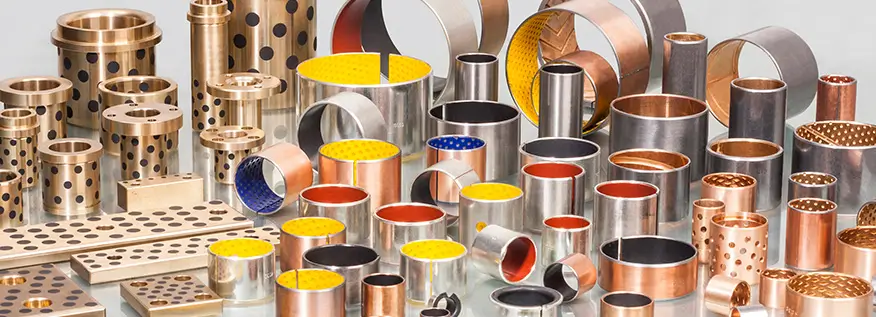
Self-Lubricating Bushings incorporate solid lubricants such as graphite, PTFE, or molybdenum disulfide into the bearing material, eliminating or drastically reducing the need for external lubrication. These include DU/SF-1 series steel-backed bushings with PTFE liners, DX/SF-2 series boundary-lubricating bushings, and graphite-embedded bronze bushings for extreme conditions.
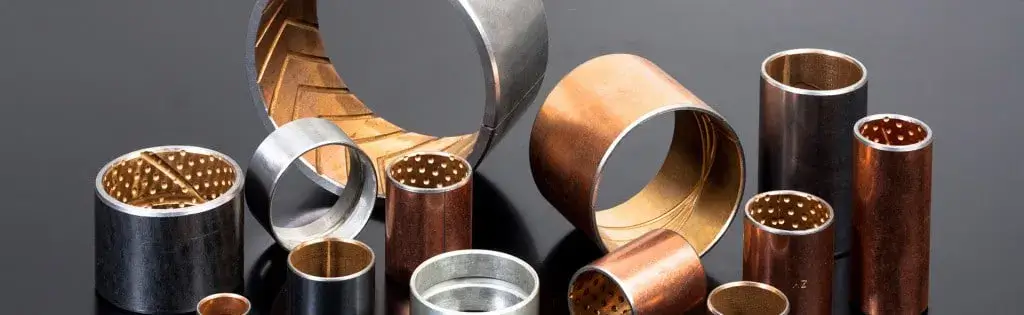
Bronze Bushings deliver exceptionally high strength and hardness, excellent wear and corrosion resistance, and high pressure tolerance. Bimetal Bushings combine a steel backing with a bronze or copper inner layer, offering the strength of steel with the friction-reducing properties of copper alloys. Wrapped Steel Bushings are manufactured from spring steel strips that are rolled, through-hardened, and internally ground, leveraging inherent elasticity for a buffering effect under heavy impact
3. Construction Machinery: Bushings in the Heart of Heavy Equipment
Construction machinery represents one of the most demanding application environments for mechanical bushings. Excavators, bulldozers, loaders, and drilling rigs operate under extreme loads, in abrasive conditions, and with minimal maintenance windows.
In excavators, bushings are installed at upper arm, lower arm, and pivot connections, where they must resist mud and sand wear while bearing heavy loads. Common bushing types for these applications include bronze bushings and self-lubricating SF-1 or JF series bushings. Loader bushings at bucket hinges and lift arms withstand frequent lifting cycles and shock loads, typically utilizing FB090 bronze bushings or self-lubricating alternatives. Bulldozer bushings in track wheels and steering joints demand long service life and high load capacity, often employing JDB solid-lubricated bushings or bimetal designs.
Drilling rig bushings installed at eccentric shafts and spindle assemblies must perform under high temperature, high pressure, and high-speed friction conditions—applications where bronze bushings and graphite-embedded bushings excel. MYWAY bushings effectively reduce equipment downtime, lower maintenance costs, and can directly replace OEM parts from Caterpillar, Komatsu, Hitachi, JCB, John Deere, and other major brands
4. Agricultural Machinery: Reliability in Demanding Field Conditions
Agricultural equipment operates in some of the harshest environments imaginable—dusty fields, exposure to fertilizers and pesticides, variable weather conditions, and often remote locations where maintenance access is limited.
Steering shafts, connecting rods, and brackets in tractors and combines require maintenance-free operation suitable for dusty field environments. Self-lubricating DX and SF-1 series bushings are ideal for these applications. Combine harvester bushings at rocker arms and cutting systems must perform in environments where dust and sludge coexist under medium loads—conditions well-suited to JF bimetal bushings and powder metallurgy bushings.
Seeder bushings at slewing joints, connecting shafts, and swivel interfaces must resist fertilizer and pesticide solutions, with PTFE composite bushings and modified POM bushings delivering 30% longer service life in these applications. Agricultural sprayer bushings at rotating pivot points and connecting parts require acid and alkali resistance, utilizing ETFE perfluoro bushings or PPS-filled bushings. Baler bushings at support shafts and transmission parts must withstand instantaneous peak loads up to 120MPa, often employing thermoplastic polymer bushings with PTFE.
5. Automotive Applications: Precision and Durability in Motion
The automotive sector demands bushings that deliver precision, durability, and performance across a wide range of operating conditions—from engine compartments exceeding 200°C to suspension systems subject to continuous shock and vibration.
Engine bushings at piston pins, connecting rod small ends, and crankshafts withstand high temperature and pressure while maintaining precise clearances. Copper-based bushings and graphite-embedded bushings are commonly specified for these critical applications. Shock absorber bushings serve as critical interfaces between shock absorber mounting points and vehicle frames or control arms, managing vibration isolation, noise reduction, and load transmission.
Steering knuckle bushings and transmission bushings require high temperature resistance and lubricant compatibility. MYWAY automotive bushings are manufactured to IATF 16949 quality standards and serve customers in more than 40 countries. With over 10,000 types of automotive bushings available, MYWAY provides solutions compatible with Hyundai, Honda, Toyota, Nissan, Ford, Chery, Geely, Lexus, Mazda, and other leading automotive brands
6. Metallurgy and Heavy Industry: Withstanding Extreme Conditions
The metallurgy industry—steel mills, aluminum extrusion plants, and rolling operations—presents some of the most punishing conditions for mechanical components. Extreme temperatures, heavy loads, continuous operation, and abrasive environments demand bushings engineered for endurance.
Cold rolling mills, hot rolling mills, calendering equipment, coke oven equipment, leveling and straightening machines, and aluminum profile extrusion presses all rely on high-performance bushings and wear plates. In these applications, failure is not an option—downtime is prohibitively expensive. PTFE-coated and self-lubricating bushings are engineered to withstand extreme pressures, high loads, and continuous operation, reducing friction, minimizing wear, and extending maintenance intervals.
Copper alloy bearings—including tin bronze, aluminum bronze, lead bronze, and phosphor bronze—have been the backbone of industrial bearing technology for centuries. Their superior thermal conductivity dissipates friction-generated heat, preventing overheating and lubricant breakdown. Exceptional wear and corrosion resistance ensure performance even in humid, acidic, or high-temperature environments. MYWAY has earned the trust of industry leaders including China First Heavy Industries Group, China National Erzhong Group, Taiyuan Heavy Industry Co., and Ma’anshan Taier Group
7. Mining Equipment: Performance Under Extreme Loads
Mining operations subject equipment to some of the most severe conditions in industry—heavy shock loads, abrasive dust, extreme temperatures, and limited access for maintenance. Bushings in mining equipment must deliver exceptional durability and reliability.
Excavator track roller bushings and hydraulic cylinder bushings must withstand continuous heavy loading while resisting abrasion from dust and debris. MYWAY bushings serve as direct OEM replacements for Komatsu, Caterpillar, Hitachi, and other mining equipment brands. Crusher bushings and conveyor system bushings operate under sustained high loads and require materials with exceptional wear resistance—often aluminum bronze or specialized copper alloys.
The self-lubricating properties of graphite-embedded bronze bushings make them particularly valuable in mining applications where external lubrication is difficult or impossible. During operation, graphite forms a self-renewing lubricant film that eliminates metal-to-metal contact, extending service life and reducing maintenance requirements
8. Hydraulic Systems and Industrial Machinery: Precision and Reliability
Hydraulic systems and general industrial machinery represent a broad application spectrum for mechanical bushings, from precision automation equipment to heavy-duty hydraulic cylinders.
Hydraulic cylinders require bushings that provide smooth sliding surfaces while reducing friction in cylinder assemblies. Pumps, compressors, and rotating equipment rely on bushings for shaft support and alignment. Material handling equipment, port machinery, and forestry equipment demand bushings with high load capacity and good corrosion resistance.
Power transmission applications including gearboxes, couplings, and pulley systems utilize taper bushings as locking mechanisms for fixing components to drive shafts. Factory automation and packaging equipment require precision bushings for accurate linear and rotary motion. MYWAY’s manufacturing capabilities include centrifugal casting with maximum diameter reaching 3 meters, positioning the company among the few capable of handling such large-scale components
9. Selection Criteria and Best Practices for Bushing Specification
Selecting the correct bushing for a specific application requires careful consideration of multiple factors. Understanding these criteria ensures optimal performance, extended service life, and cost-effective operation.
Load Characteristics are paramount—consider the magnitude and direction of loads (radial, axial, or combined), whether loads are static or dynamic, and the presence of shock or impact loading. Bushings excel under heavy loads and shock conditions due to their large contact area.
Speed and Motion influence material selection—low-speed, high-load applications favor bronze and self-lubricating materials, while higher-speed applications may require specialized materials with lower friction coefficients. Temperature Range determines material compatibility—extreme temperatures may require specialized alloys or graphite-embedded designs.
Environmental Conditions including moisture, dust, chemical exposure, and contamination risk affect material selection. Self-lubricating bushings are particularly valuable in environments where external lubrication is impractical. Maintenance Requirements and total cost of ownership should be evaluated—while premium bushings may have higher initial costs, extended service life and reduced downtime often result in lower overall costs.
OEM Compatibility is critical for replacement applications—MYWAY bushings are engineered as exact matches to OEM specifications for Caterpillar, Komatsu, Volvo CE, Sandvik, Metso, and other brands, providing drop-in replacement solutions
Why Choose MYWAY Bushings?
MYWAY is a professional manufacturer and supplier of high-performance metal bushings dedicated to serving the global heavy machinery, construction, mining, agricultural, automotive, hydraulic, and industrial equipment sectors. With over 20 years of experience, IATF/ISO quality certifications, and customers in more than 40 countries, MYWAY delivers precision-engineered bushing solutions that outperform standard alternatives.
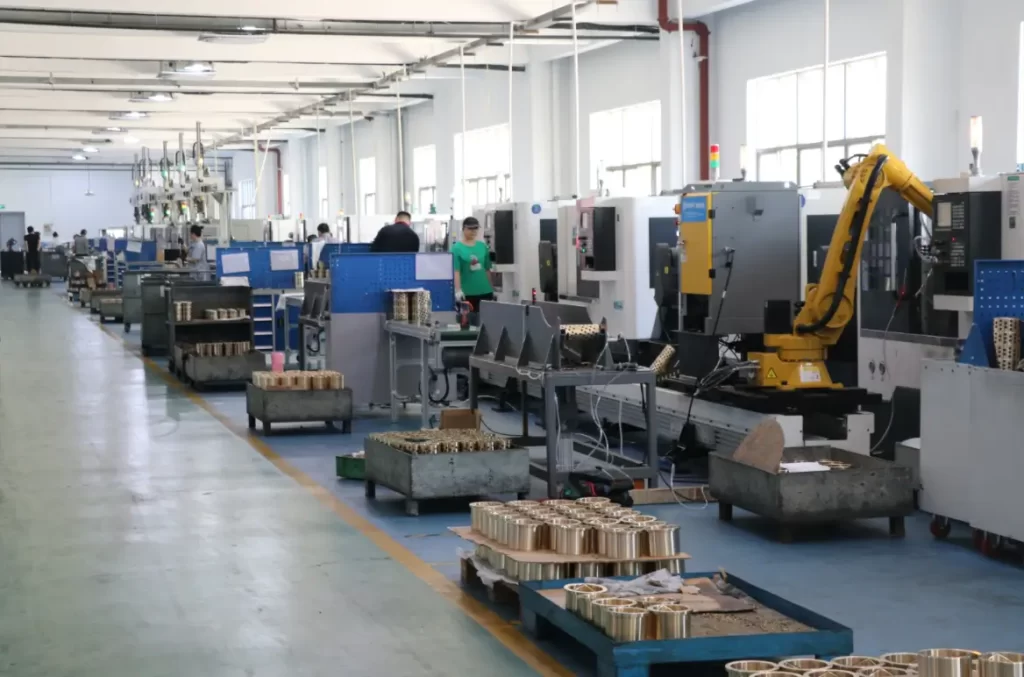
Comprehensive Product Range includes self-lubricating bushings (DU/SF-1 series), boundary-lubricating bushings (DX/SF-2 series), bronze bushings, bimetal bushings, wrapped steel bushings, thrust washers, wear plates, and custom-engineered solutions. Advanced Manufacturing Capabilities encompass centrifugal casting up to 3 meters diameter, precision CNC machining, controlled sintering processes, and rigorous quality inspection.
OEM Replacement Compatibility ensures direct drop-in replacement for Caterpillar, Komatsu, Hitachi, JCB, John Deere, Volvo CE, Sandvik, Metso, and other leading equipment brands. Customization Services provide OEM/ODM capabilities—tailoring size, material, coating, and design to exact specifications.
Proven Performance in demanding applications across construction, mining, agriculture, metallurgy, automotive, and industrial sectors has established MYWAY as a trusted partner for engineers and procurement professionals worldwide
Frequently Asked Questions
Q1: What is the difference between a bushing and a bearing?
A bushing is a type of bearing—specifically, a plain bearing or sleeve bearing. While rolling-element bearings (ball bearings, roller bearings) use moving elements to reduce friction, bushings operate on sliding friction, creating a low-friction interface directly between the shaft and the bearing surface. Bushings are particularly well-suited for heavy loads, shock loading, and applications where compact design and quiet operation are priorities.
Q2: What materials are commonly used for mechanical bushings?
Common bushing materials include bronze (tin bronze, aluminum bronze, lead bronze, phosphor bronze), steel (including wrapped spring steel and seamless steel), bimetal combinations (steel backing with bronze lining), copper alloys, and engineering polymers. Material selection depends on load, speed, temperature, environment, and lubrication requirements.
Q3: When should self-lubricating bushings be used?
Self-lubricating bushings are ideal for applications where external lubrication is difficult, expensive, or impossible—such as dusty environments, high-temperature operations, food processing equipment, or machinery in remote locations. They incorporate solid lubricants (graphite, PTFE, molybdenum disulfide) that provide continuous lubrication throughout the service life, reducing maintenance requirements and extending component longevity.
Q4: How do I select the correct bushing for my application?
Selection requires evaluating load characteristics (magnitude, direction, static/dynamic, shock loading), operating speed, temperature range, environmental conditions (moisture, dust, chemicals), lubrication availability, maintenance requirements, and OEM compatibility. Consulting with an experienced manufacturer like MYWAY ensures proper specification for optimal performance and service life.
Q5: Can MYWAY bushings replace OEM parts?
Yes. MYWAY bushings are engineered as exact matches to OEM specifications for Caterpillar, Komatsu, Hitachi, JCB, John Deere, Volvo CE, Sandvik, Metso, and other major equipment brands. They provide drop-in replacement solutions that reduce procurement costs while ensuring performance.
Q6: What industries benefit most from high-quality bushings?
Construction machinery, mining equipment, agricultural machinery, automotive manufacturing, metallurgy and steel production, hydraulic systems, material handling, power transmission, marine engineering, and general industrial machinery all depend on high-quality bushings for reliable operation.
Q7: How does MYWAY ensure product quality?
MYWAY maintains IATF 16949 and ISO quality certifications, employs controlled sintering processes, implements rigorous quality inspection protocols, and utilizes advanced manufacturing technologies including precision CNC machining and centrifugal casting
100000+ Types of Bushings – Contact Us for Details