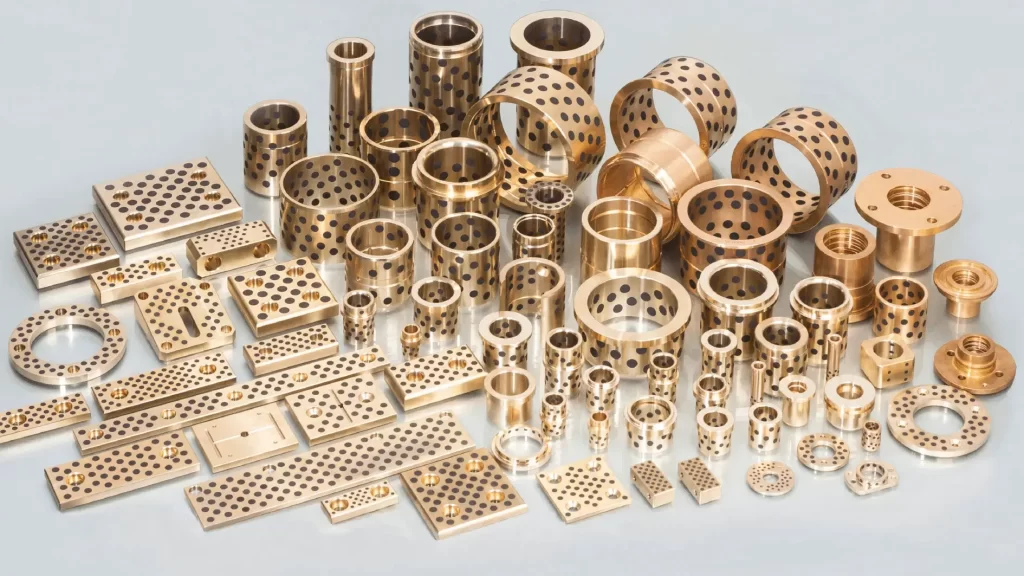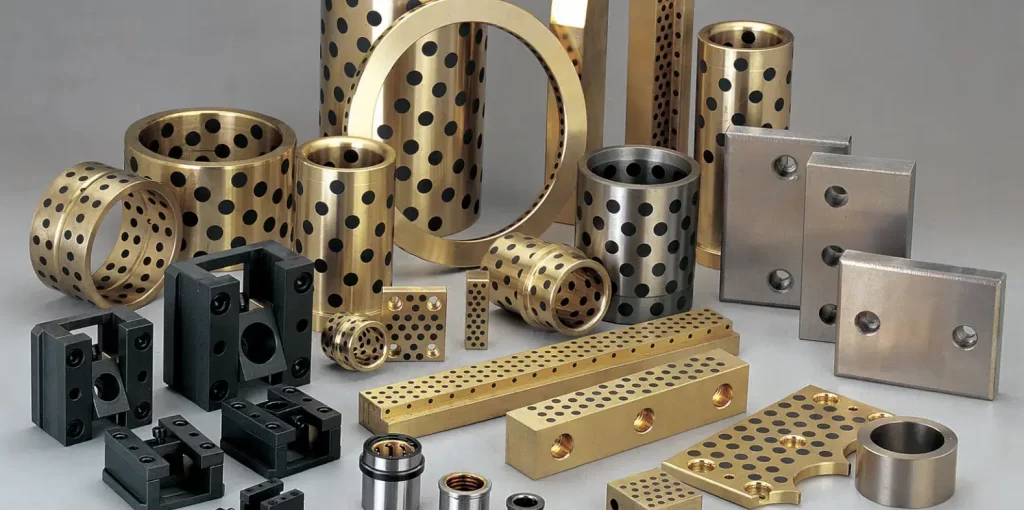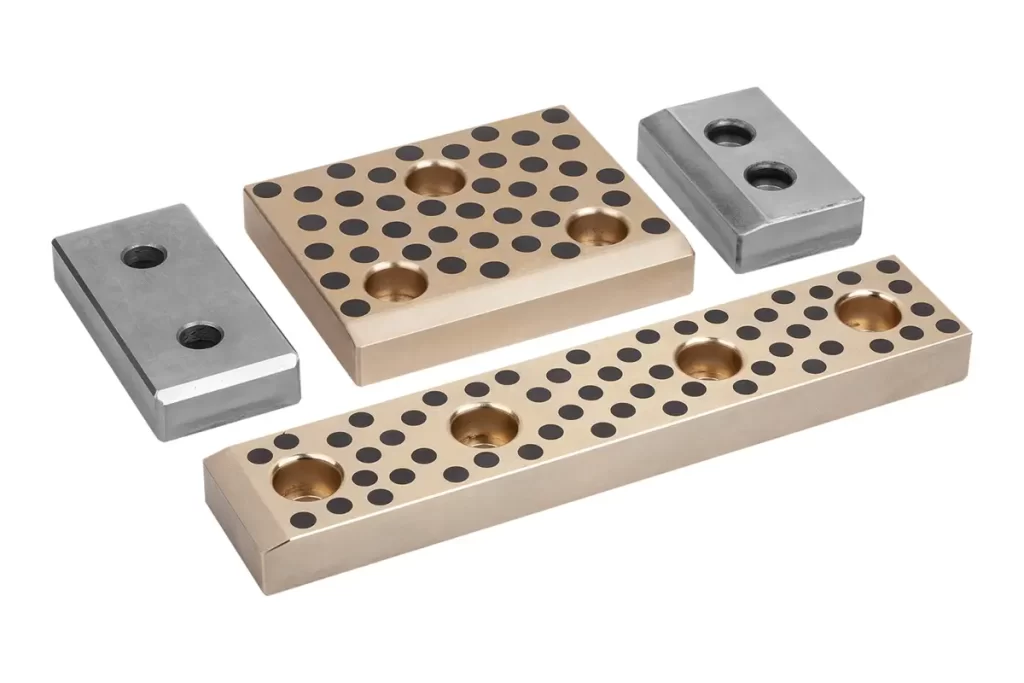
wear resistant bushing

Continuous Casting Machine Bushing Solutions: Engineering Guide for Steel Mills
Interpretation of Bushing Knowledge

Continuous Casting Machine Bushing Solutions: Engineering Guide for Steel Mills

In modern metallurgical operations, the continuous casting machine represents the critical interface between liquid steel refining and solid product forming. Within this sophisticated system, bushings function as indispensable tribological components that directly influence equipment reliability, product quality, and operational economy. This comprehensive technical resource examines bushing technologies deployed across continuous casting applications—from mold oscillation mechanisms to strand guide roller assemblies—providing engineers and procurement professionals with actionable intelligence for component selection and lifecycle optimization.
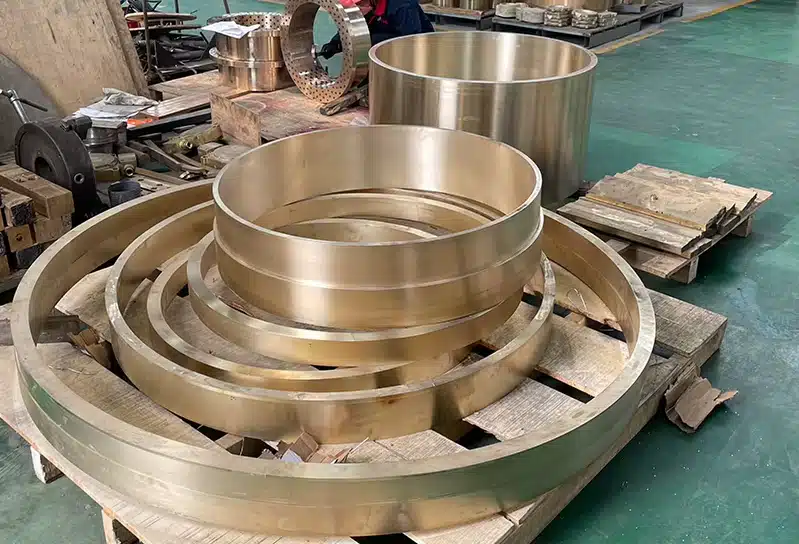
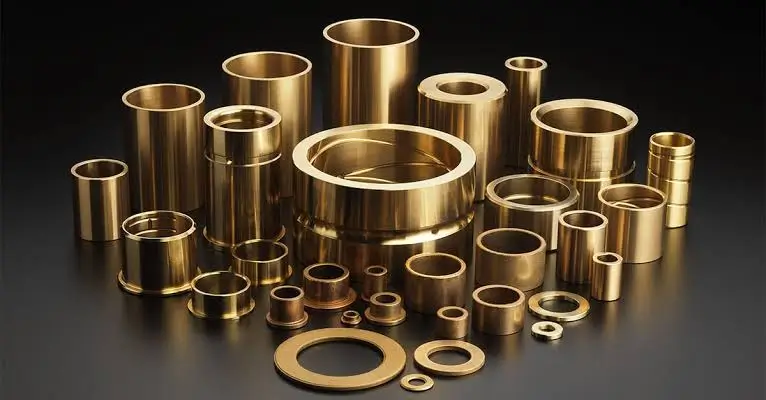
Centrifugal Cast Bronze Bushing: Copper-Alloy Metallurgy, Dense Casting Structure, Precision Machining, and Reliable Supply
Interpretation of Bushing Knowledge

Centrifugal Cast Bronze Bushing: Copper-Alloy Metallurgy, Dense Casting Structure, Precision Machining, and Reliable Supply

A centrifugal cast bronze bushing is a copper-alloy plain bearing made in a rotating mould, where molten bronze is distributed against the mould wall before solidification. The process is used for sleeves, flanged bushes, large bearing bushes, worm-shaft bushes, crusher parts, marine components, pumps, valves and high-load wear parts. A reliable bushing depends on alloy grade, melt cleanliness, pouring temperature, rotation speed, cooling, segregation control, machining allowance, shaft finish, lubrication design, fit and inspection. ASTM B271/B271M establishes requirements for copper-base alloy centrifugal castings.

OEM C63000 Nickel Aluminum Bronze – The Ultimate High-Strength Alloy for Demanding Industrial Applications
Interpretation of Bushing Knowledge

OEM C63000 Nickel Aluminum Bronze – The Ultimate High-Strength Alloy for Demanding Industrial Applications

In the realm of industrial engineering, material selection directly dictates equipment reliability, service life, and operational safety. Among the vast family of copper-based alloys, C63000 nickel aluminum bronze stands out as a premier choice for components subjected to heavy loads, corrosive media, and abrasive environments. As OEM requirements grow increasingly stringent, understanding the full capabilities of this alloy becomes essential for procurement specialists, design engineers, and maintenance managers alike. This article delivers a comprehensive, data-free examination of C63000 nickel aluminum bronze, focusing exclusively on its functional advantages and real-world applications, while positioning MYWAY bushings as the benchmark solution for critical rotating and sliding assemblies.

C63000 Aluminum Bronze: The Premier Alloy for High-Strength, Corrosion-Resistant Engineering Components
Interpretation of Bushing Knowledge

C63000 Aluminum Bronze: The Premier Alloy for High-Strength, Corrosion-Resistant Engineering Components

In the demanding world of industrial engineering, material selection dictates operational longevity and mechanical reliability. Among the pantheon of copper-based alloys, C63000 (also known as Nickel Aluminum Bronze) stands as a paragon of metallurgical excellence. This article explores the multifaceted nature of C63000, detailing its mechanical properties, wide-ranging applications, and pivotal role in heavy machinery. As we dissect its advantages, we also introduce MYWAY’s precision-engineered bushings—crafted to leverage the full potential of this superior alloy for your critical operations.

Interpretation of Bushing Knowledge

Sleeve Bushing: The Definitive Technical and Application Resource for Industrial Drive Systems

A sleeve bushing, often referred to as a plain bearing, sliding bearing, or journal bearing, represents a cylindrical component designed to provide bearing surfaces for rotating or sliding shafts within mechanical systems . Unlike rolling element bearings that utilize balls or rollers to facilitate movement, the sleeve bushing operates on the principle of sliding friction . This foundational distinction underscores its unique capabilities in managing heavy loads, accommodating shock conditions, and offering a cost-effective solution for numerous industrial applications.

Interpretation of Bushing Knowledge

Premium Wear Plate: Engineering Longevity for High-Abrasion Industrial Assets

In high-wear industrial environments, equipment longevity is not merely a matter of maintenance scheduling—it is a direct determinant of operational profitability. Premium wear plates serve as the critical interface between heavy machinery and the abrasive forces that threaten structural integrity. These engineered components function as sacrificial armor, absorbing the punishment of continuous impact, sliding abrasion, and erosion that would otherwise consume capital equipment at an unsustainable rate

Interpretation of Bushing Knowledge

The Definitive Resource on Bushing Aluminum: Applications, Advantages, and Engineering Excellence

As an indispensable precision component in modern industrial systems, aluminum bushings have evolved far beyond simple pipe connections, extending into heavy machinery, automotive manufacturing, aerospace, and other high-end sectors. Leveraging the unique combination of lightweight construction, corrosion resistance, and high thermal conductivity inherent to aluminum alloys, these bushings deliver significant advantages in weight reduction, energy efficiency, improved system responsiveness, and extended maintenance intervals. Whether serving as reducing fittings in fluid systems or as plain bearings in mechanical equipment, aluminum bushings quietly yet critically ensure the reliable operation of countless assets.

Metallic Bushes: High-Performance Metal Bearings & Self-Lubricating Bush
Interpretation of Bushing Knowledge

Bronze Bushings: The Engineering Workhorse for Heavy-Duty Industrial Applications

In the realm of mechanical engineering and industrial machinery, few components are as essential yet understated as the bronze bushing. These cylindrical plain bearings serve as the silent backbone of countless mechanical systems, enabling smooth rotational and linear motion while protecting valuable equipment from premature wear and failure. From the towering cranes at construction sites to the precision instruments in aerospace engineering, bronze bushings are indispensable across virtually every industrial sector

Interpretation of Bushing Knowledge

Bronze vs. Brass Bushings: A Comprehensive Technical Comparison for Industrial Applications

Bronze and brass represent two of the most widely utilized copper-based alloy families in industrial manufacturing. Despite their visual similarities and shared copper foundation, these materials exhibit fundamentally distinct metallurgical characteristics that dictate their suitability for specific engineering applications. For procurement engineers, maintenance managers, and design professionals engaged in bushing and bearing selection, understanding the nuanced differences between bronze and brass is a critical determinant of equipment reliability, operational longevity, and total cost of ownership. This comprehensive technical analysis examines bronze and brass through the lens of industrial bushing applications, providing actionable insights for informed material selection.

Common Wear Plate Materials, Performance Features and Industrial Application
Interpretation of Bushing Knowledge

Common Wear Plate Materials, Performance Features and Industrial Application

In heavy industries such as mining, construction and metallurgy, equipment surface wear, impact damage, erosion and corrosion are key pain points affecting operation and maintenance. Friction from raw materials accelerates metal wear, causing frequent failures, production downtime, higher replacement costs and lower efficiency.
Choosing suitable wear plate materials is the most cost-effective wear protection solution. Hardness, toughness, impact resistance and other properties directly determine the service life of accessories. This article sorts out mainstream wear plate materials, their performance, applicable scenarios and selection principles, and recommends MYWAY custom wear-resistant bushings to help buyers build an anti-wear system, reduce costs and extend equipment life.

Scroll to Top