
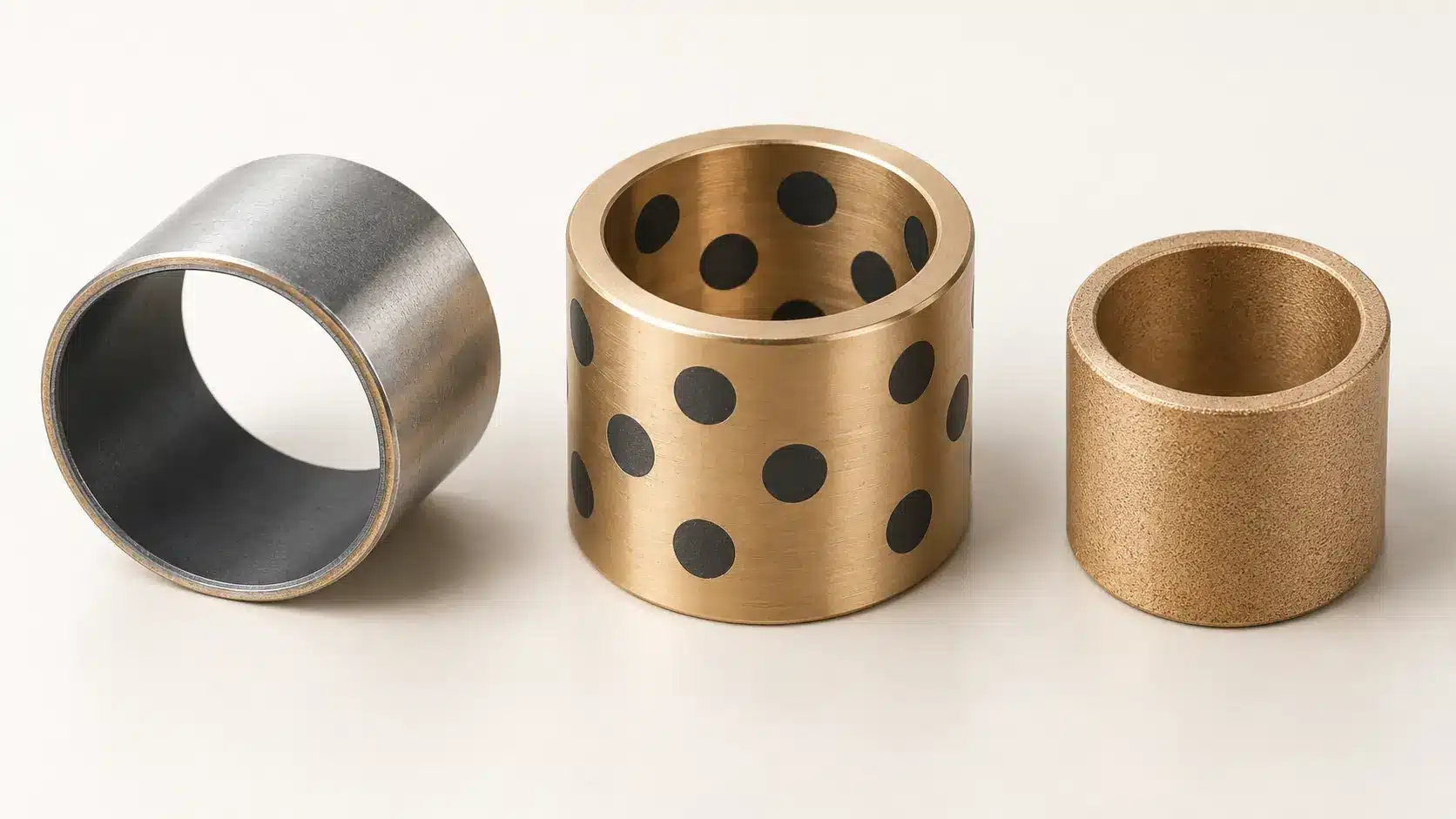
What “Self-Lubricating” Actually Means (And Why Half the Industry Uses the Term Wrong)
Let me be blunt: “self-lubricating” is one of those phrases that sounds great in a brochure and causes headaches on the factory floor. It does not mean the bushing never wears. It does not mean you can ignore load, speed, or shaft finish. What it really means is that the lubricant is already inside the material — PTFE, graphite, oil trapped in pores — and it gets released while the thing runs. This article breaks down what that looks like in real life, where self-lubricating bushings win, where they fail, and how MYWAY’s eight core bushing lines solve specific problems. If you spec bushings for a living, this is the no-BS version.
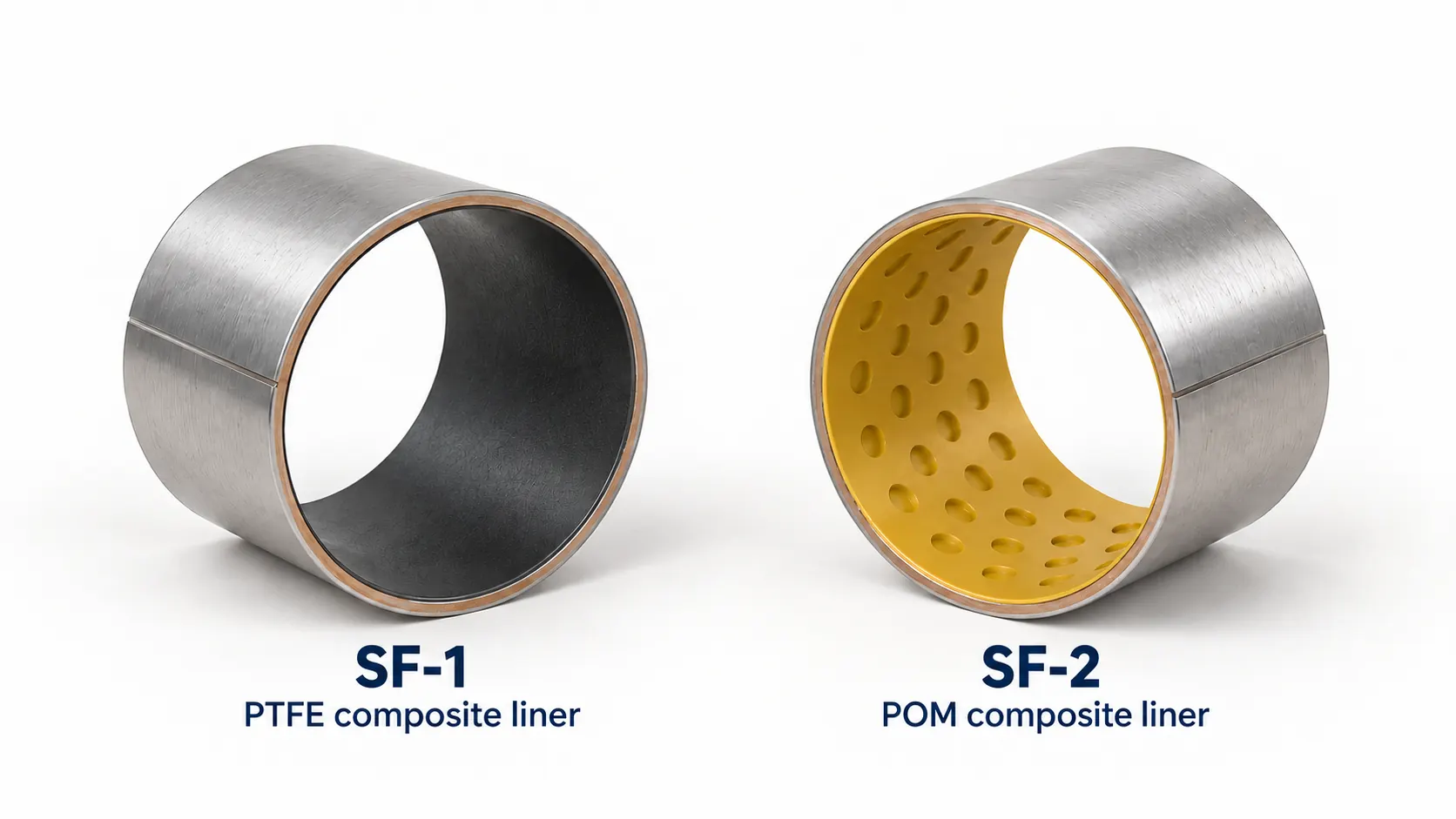
SF-1 vs SF-2: Which Self-Lubricating Bushing Is Right for Your Machine?
SF-1 and SF-2 bushings look almost identical on the outside. Both are three-layer steel-backed composite bearings. But their surface materials — PTFE versus POM — create two fundamentally different wear mechanisms, load profiles, and application windows. This article breaks down the material architecture, performance data, and real-world selection logic behind both types. It also shows how MYWAY’s SF-1 and SF-2 product lines are engineered for different operating conditions, and why getting the choice right saves you money on maintenance and downtime.
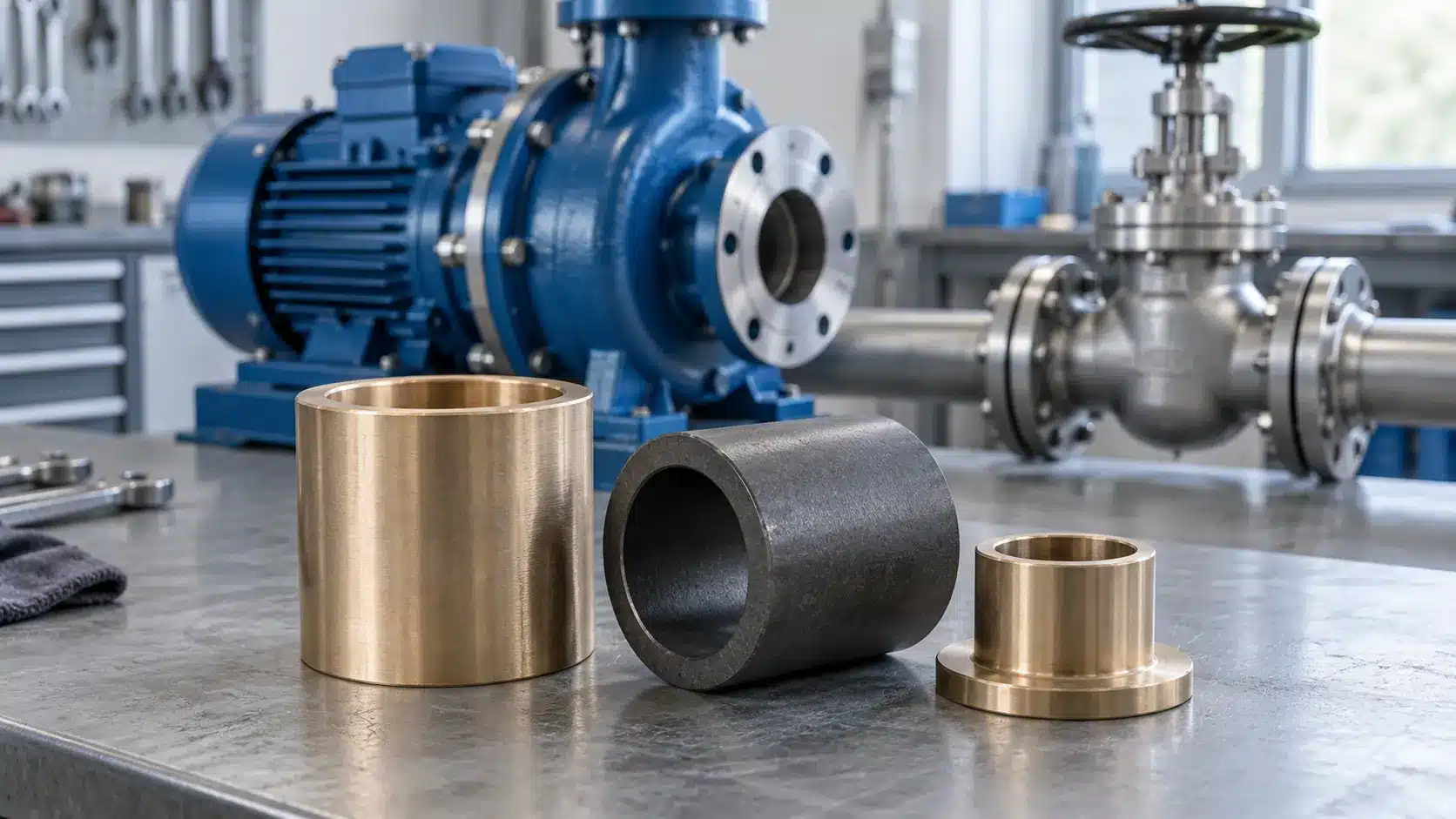
Bushing Solutions for Pumps and Valves: Materials, Failure Prevention, and Procurement Strategies That Cut Downtime
Bushings are among the most overlooked yet failure-prone components in pumps and valves. When they fail, the consequences ripple outward—seal damage, shaft wear, vibration, efficiency loss, and unplanned shutdowns. This article breaks down bushing solutions for pumps and valves from a practical standpoint: what materials work best for different fluids and operating conditions, how to diagnose failure patterns, what installation tolerances actually matter, and how to evaluate suppliers
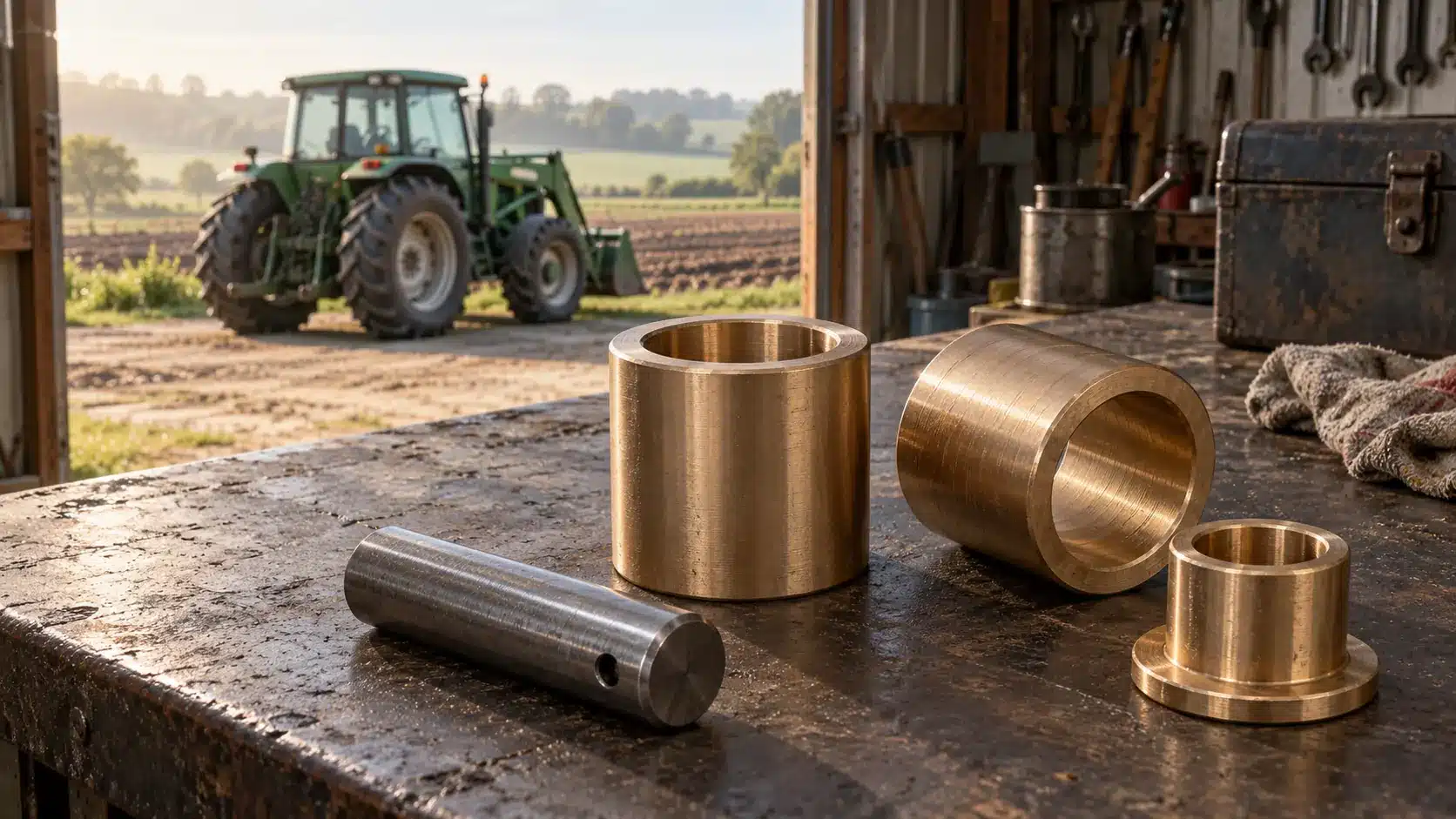
Bushings for Agricultural Machinery: How the Right Bushing Keeps Your Equipment Running Season After Season
Every farmer knows the feeling: it’s the middle of harvest, and something starts knocking, squeaking, or worse — seizing up. More often than not, the culprit is a worn bushing. These small, cylindrical components sit at the heart of almost every pivot point, steering joint, and drive mechanism on modern agricultural equipment, yet they rarely get the attention they deserve until they fail. This article breaks down what agricultural machinery bushings actually do, which materials work best for different field conditions, how to spot wear before it turns into a breakdown, and what to look for when sourcing replacements. Whether you’re running tractors, combine harvesters, planters, or balers, understanding bushings can save you serious downtime and money.
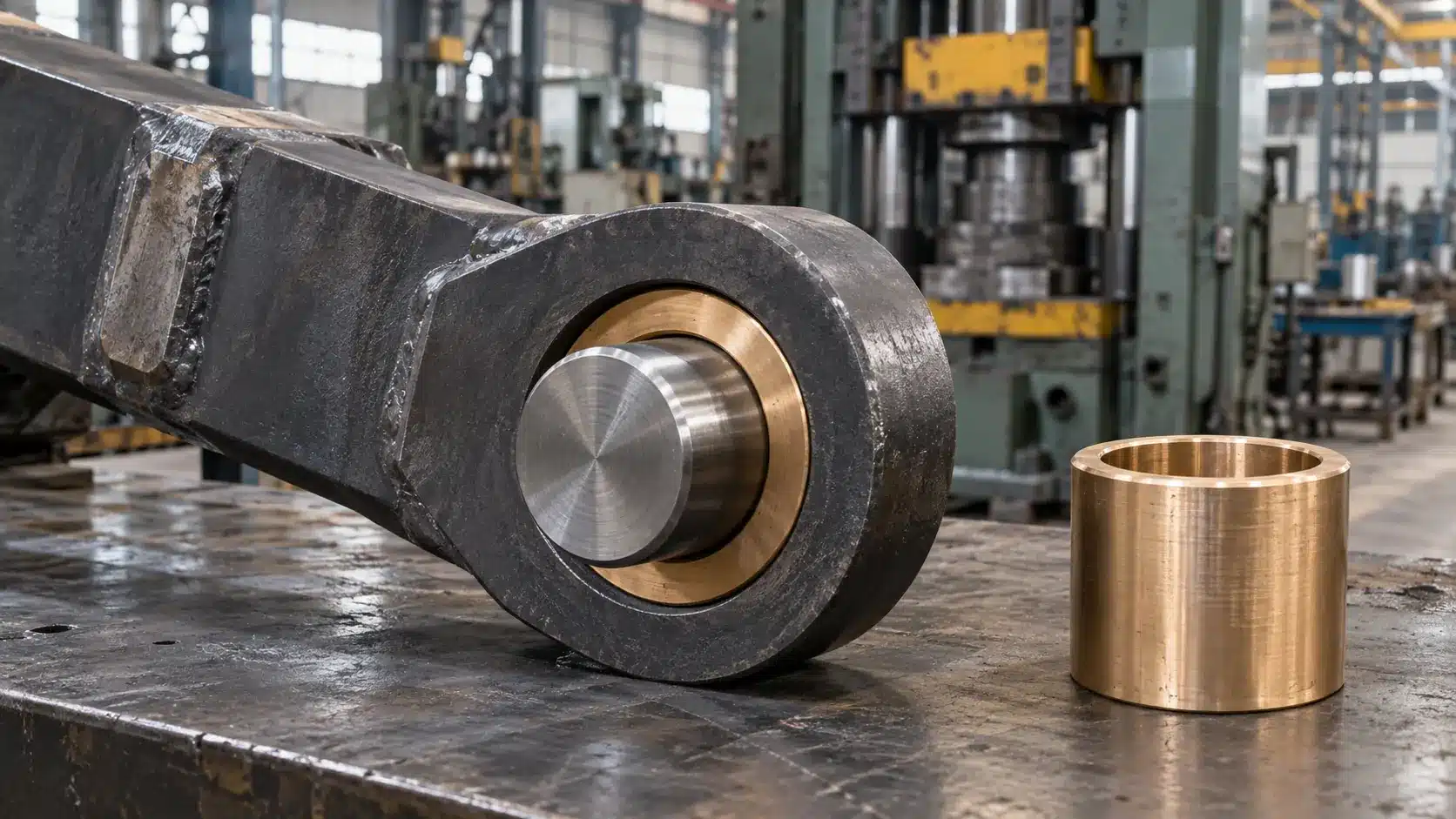
Bronze Bushings for High-Load Industrial Joints: Materials, Design Logic, and Selection That Actually Holds Up
High-load industrial joints — the pivot points on excavators, the slew rings on cranes, the articulation hinges on motor graders — live and die by their bushings. When a bronze bushing fails, the whole machine goes down, and the repair bill rarely stops at the bushing itself. This article cuts through the marketing noise and walks through what actually matters: which bronze alloy fits which load profile, how the PV factor drives real-world performance limits, why self-lubricating graphite-plugged designs outperform conventional lubricated bushings in oscillating joints, and what to check before you place a bulk order. Whether you’re an OEM engineer specifying a new joint or a maintenance manager tired of premature bushing failures, the material here is drawn from industry data, supplier specifications, and field experience.
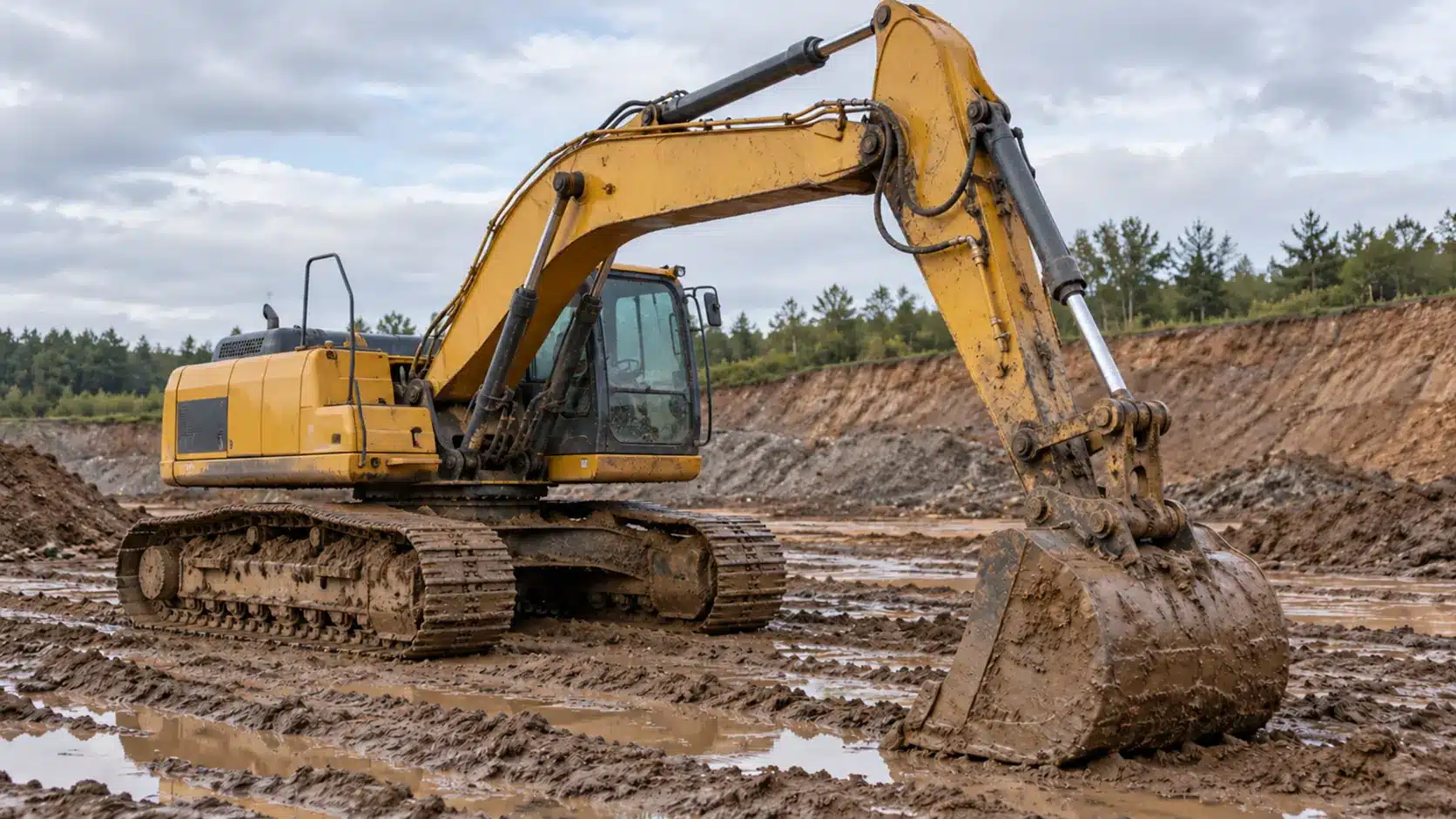
Bushings for Construction Equipment in Dirty Environments: Why Most Fail and How to Choose Ones That Don’t
Dust, mud, and grit destroy construction equipment bushings faster than almost anything else. A single dust particle that slips past a worn seal can turn lubricant into abrasive paste and accelerate wear within hours. This article breaks down why bushings fail in contaminated environments, compares bushing materials side by side, and shows how to extend service life without adding massive maintenance costs. Real-world cost data, lubrication strategies, and selection criteria are covered—plus what to look for in a bushing supplier who actually understands heavy equipment.
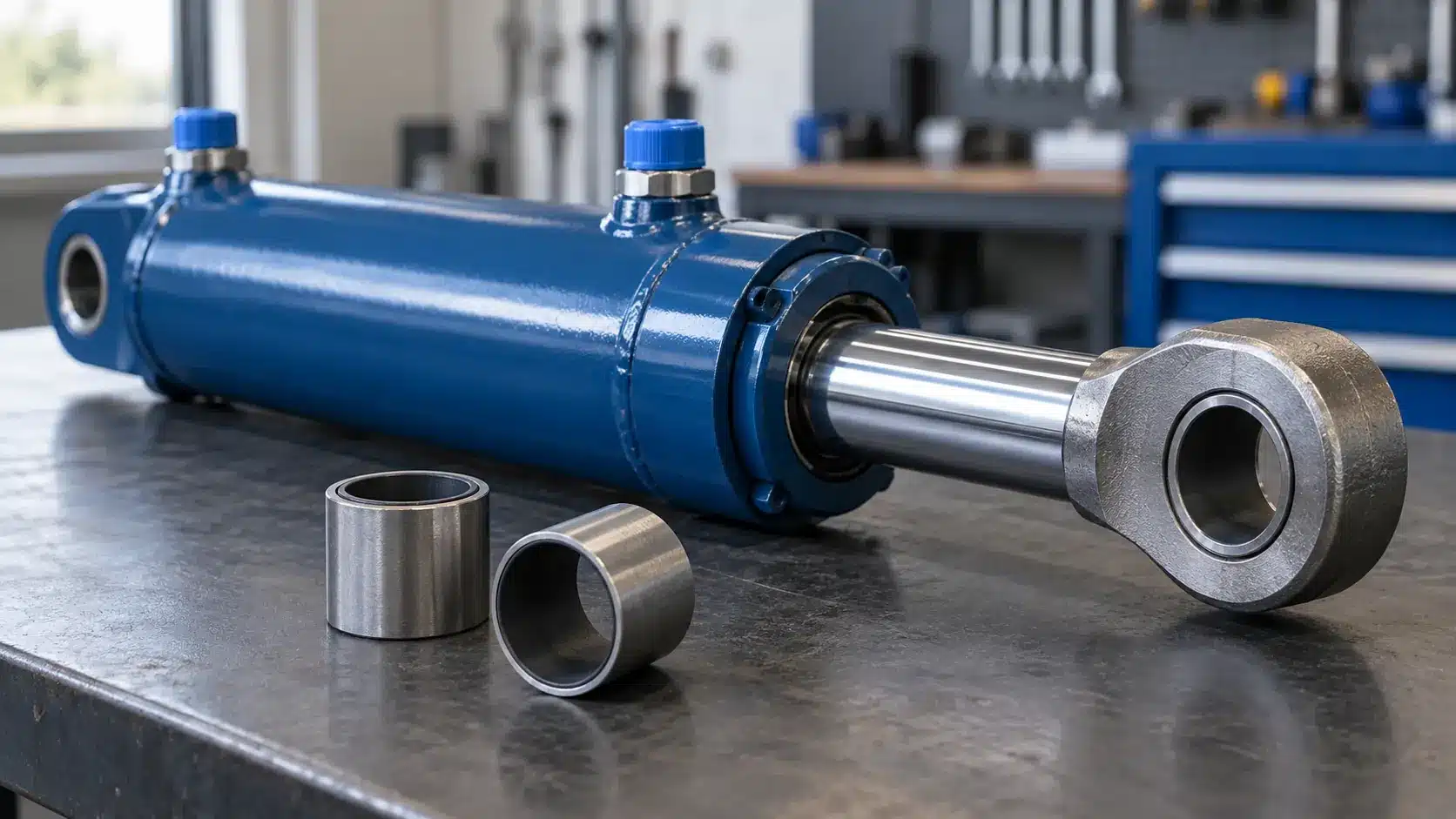
Self-Lubricating Bushings in Hydraulic Cylinders: The Complete Engineering Reference for Design, Selection & Maintenance
Self-lubricating bushings have become the default guiding solution in modern hydraulic cylinder design, replacing greased bronze and roller bearings in rod glands, piston guides, and pivot points. This article covers the working principles, material architectures (PTFE composite, graphite-plugged bronze, engineered polymer), performance data, selection methodology, installation best practices, and failure analysis for self-lubricating bushings in hydraulic cylinders. Drawing on published tribological research, OEM maintenance manuals, and field application data, it provides design engineers and maintenance teams with a practical decision-making framework for extending cylinder service life, reducing maintenance costs, and eliminating lubrication-related downtime. A dedicated FAQ section addresses the most common field questions, and a supplier introduction for MYWAY bushings is included at the end for procurement reference.
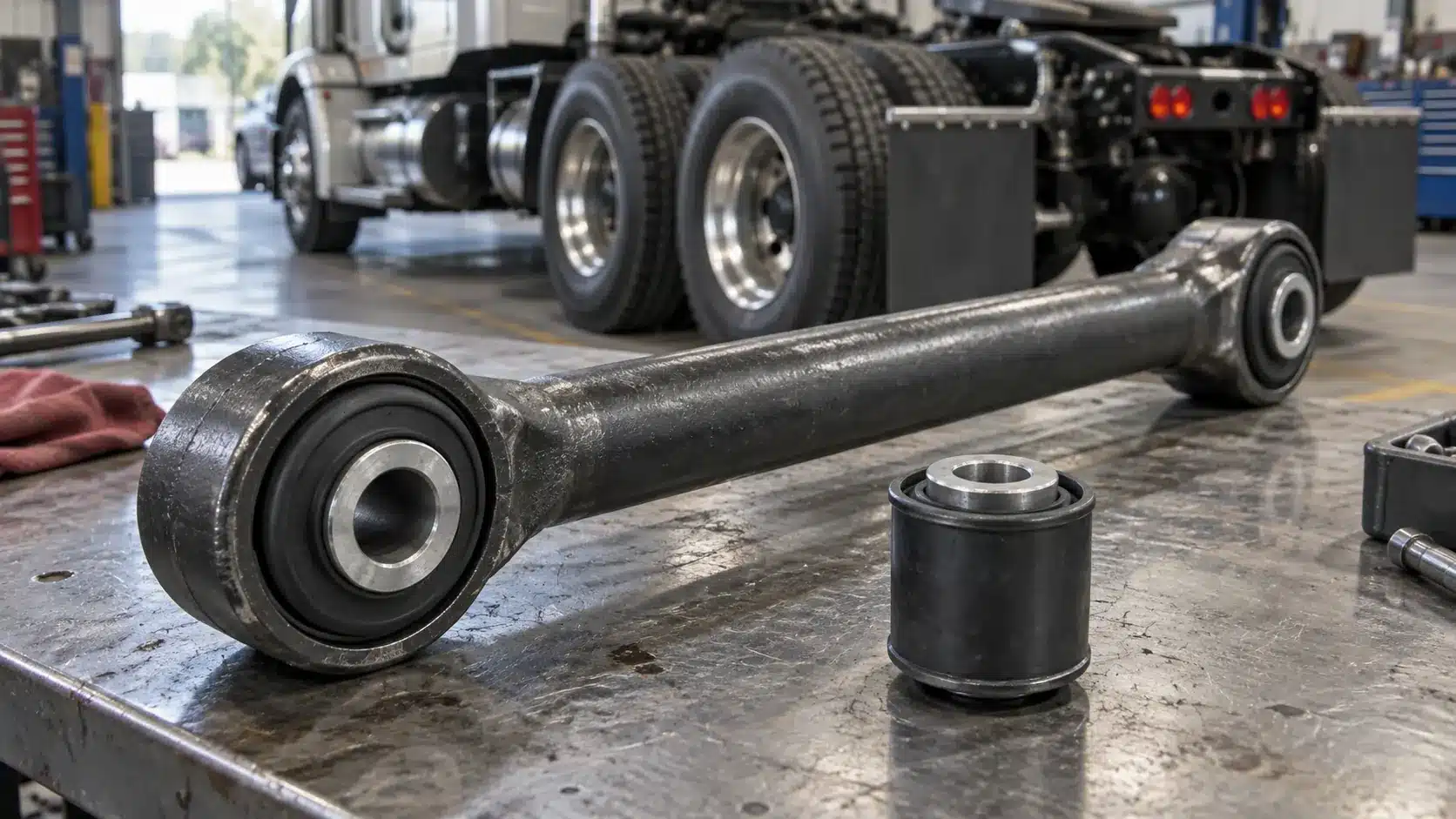
Heavy-Duty Suspension Linkage Bushings: What Fleets, Engineers, and Buyers Actually Need to Know
Nobody pulls over to admire a suspension bushing. But when one fails, the whole truck feels it — wandering steering, uneven tire wear, clunking noises, and sometimes a roadside inspection violation that puts you out of service. This article cuts through the marketing fluff and looks at what heavy-duty suspension linkage bushings really do, how rubber and polyurethane compare in actual fleet service, how to spot failure before it becomes a breakdown, what specs belong on your purchase order, and where the global bushing market is heading. We also explain why MYWAY has become a go-to supplier for self-lubricating and polyurethane bushings in commercial vehicle applications across 40+ countries — and how to get a quote that matches your exact application.
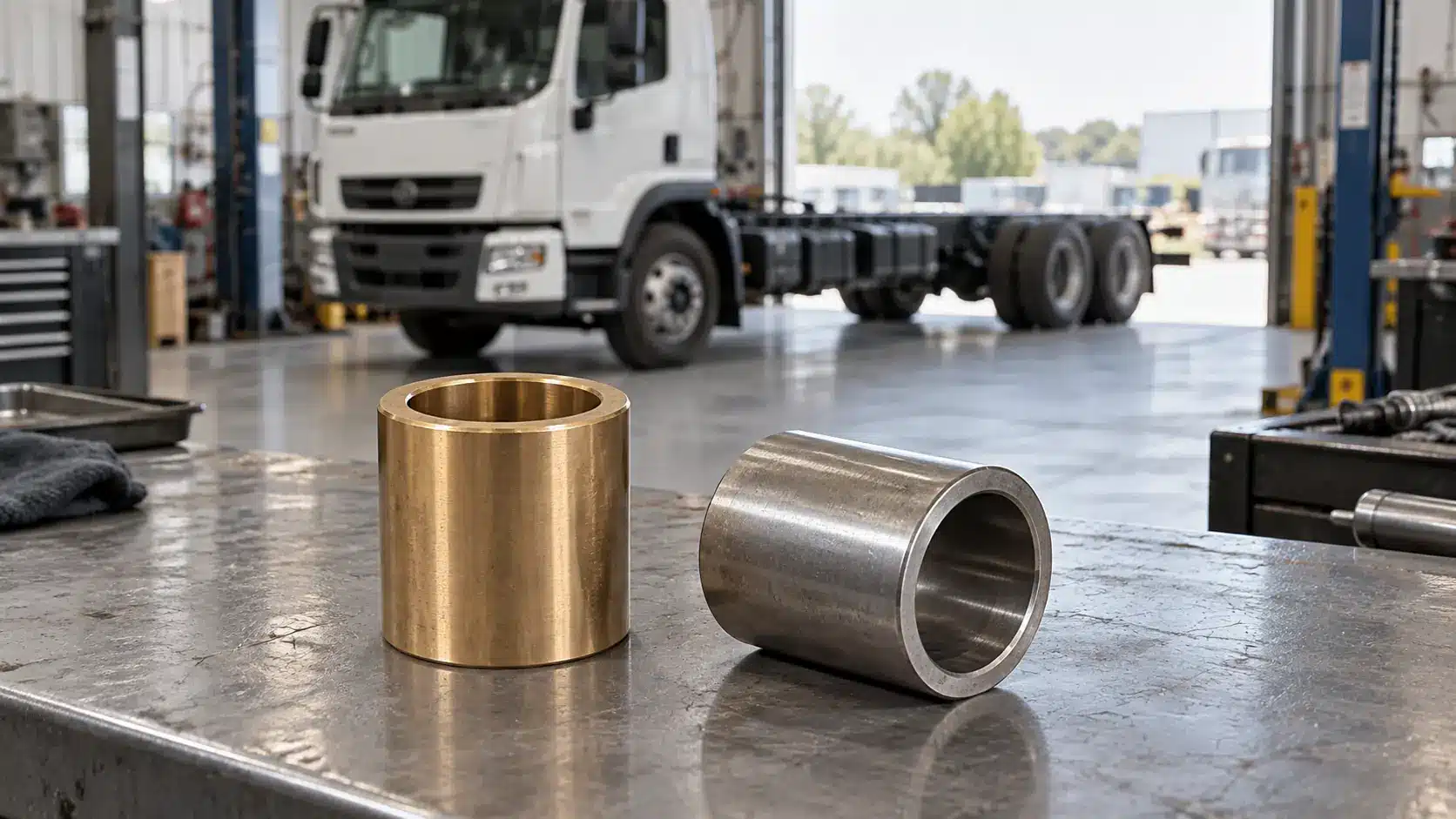
Truck Chassis Bushings: The Complete Buyer’s Guide to Choosing the Right Components for Heavy-Duty Fleets
This guide walks fleet managers, parts distributors, and maintenance buyers through the critical factors in selecting truck chassis bushings — from rubber vs. polyurethane vs. composite material choices to hands-on inspection protocols, supplier qualification standards, and installation best practices. Whether you manage a 50-truck fleet or source bushings for the aftermarket trade, this article gives you a practical framework for making smarter purchasing decisions.
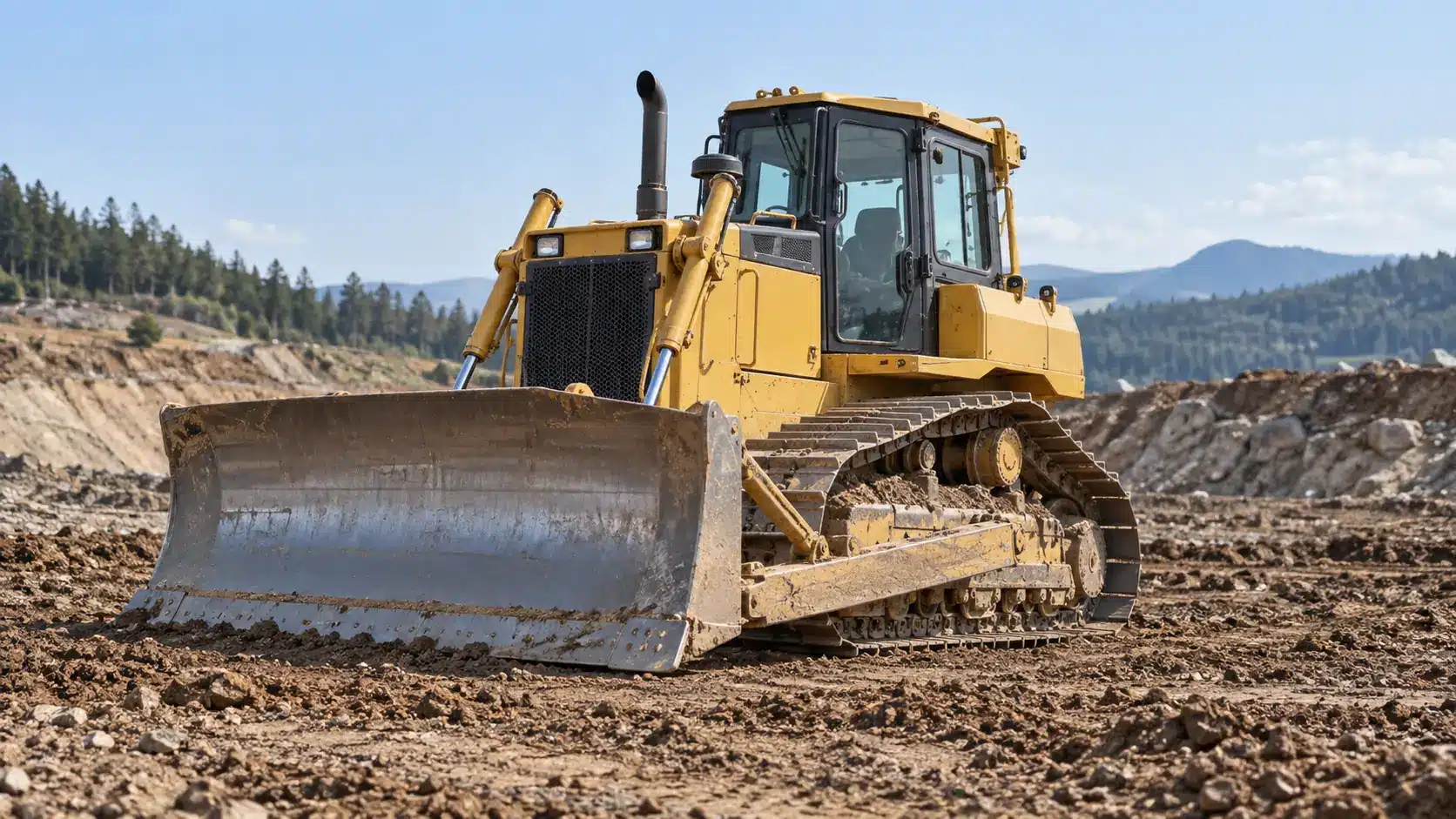
Choosing Bushings for Equalizer Bars: A Heavy-Duty Buyer’s Guide to Fit, Material, and Long-Term Performance
Equalizer bar bushings are small but vital. They sit at tandem axle suspension pivot points and control walking beam movement under load. Correct bushings absorb road shock, cut vibration, keep axles aligned, and stabilize the suspension. Wrong ones cause clunking, uneven tire wear, side lean, cracked brackets, and downtime. This guide helps fleet managers, maintenance supervisors, parts buyers, and distributors understand center vs end bushings, rubber vs polyurethane vs bronze, key dimensions and hardness, replacement signs, ordering questions, installation, and maintenance. Searching for equalizer bar, walking beam, Hendrickson, trailer, or heavy-duty suspension bushings? This guide helps you ask better questions
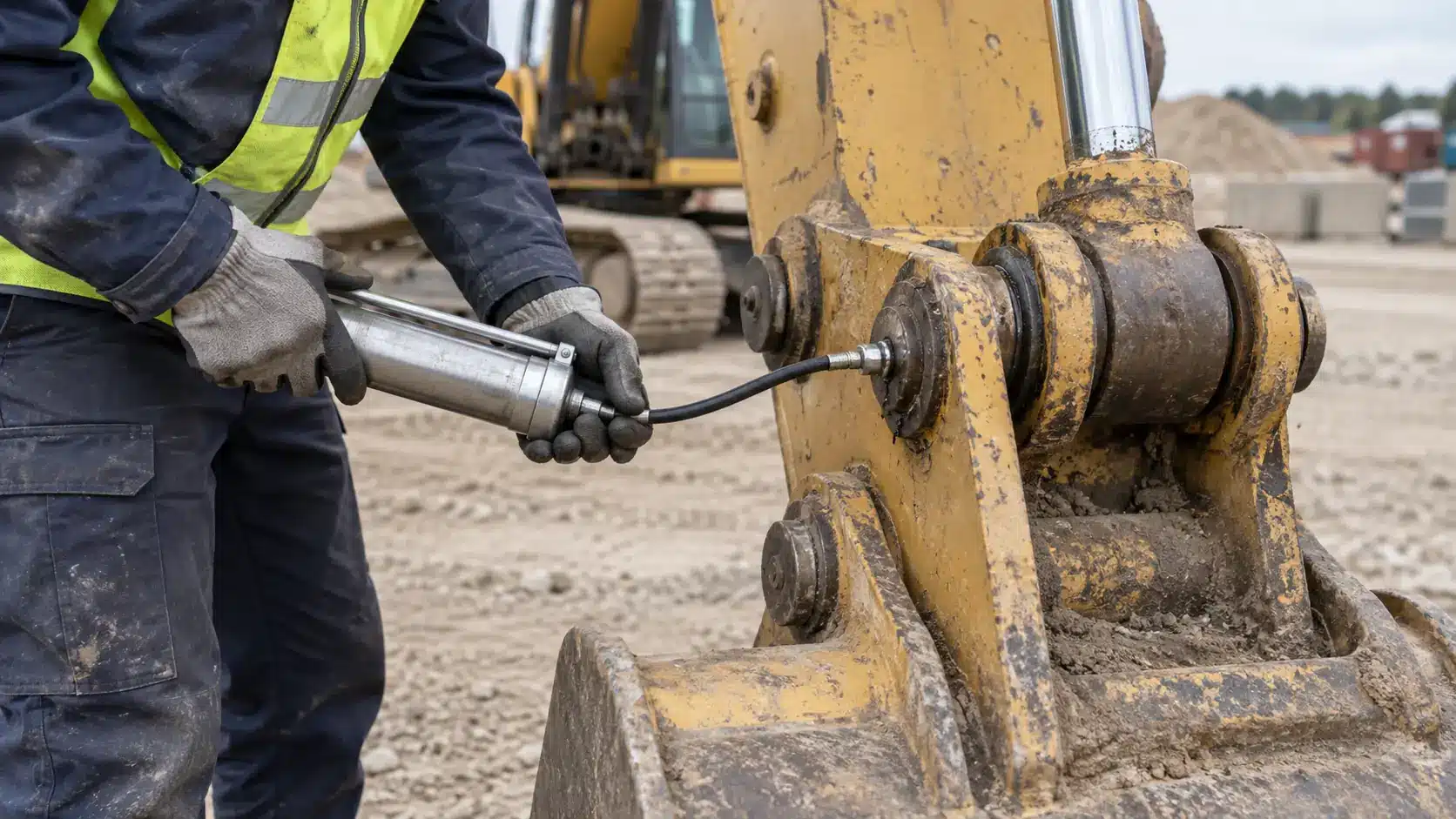
How Excavator Bushings Reduce Downtime, Prevent Costly Repairs, and Protect Your Fleet‘s Uptime
Excavator bushings sit at the heart of every pivot point on your machine. They absorb shock, reduce friction, and protect expensive structural components from damage. When bushings fail prematurely, the consequences cascade through the entire undercarriage and attachment system—turning a few-hundred-dollar part into a five-figure repair bill. This article examines how quality bushings directly impact excavator uptime, what causes premature bushing failure, and how choosing the right components can dramatically reduce total cost of ownership.
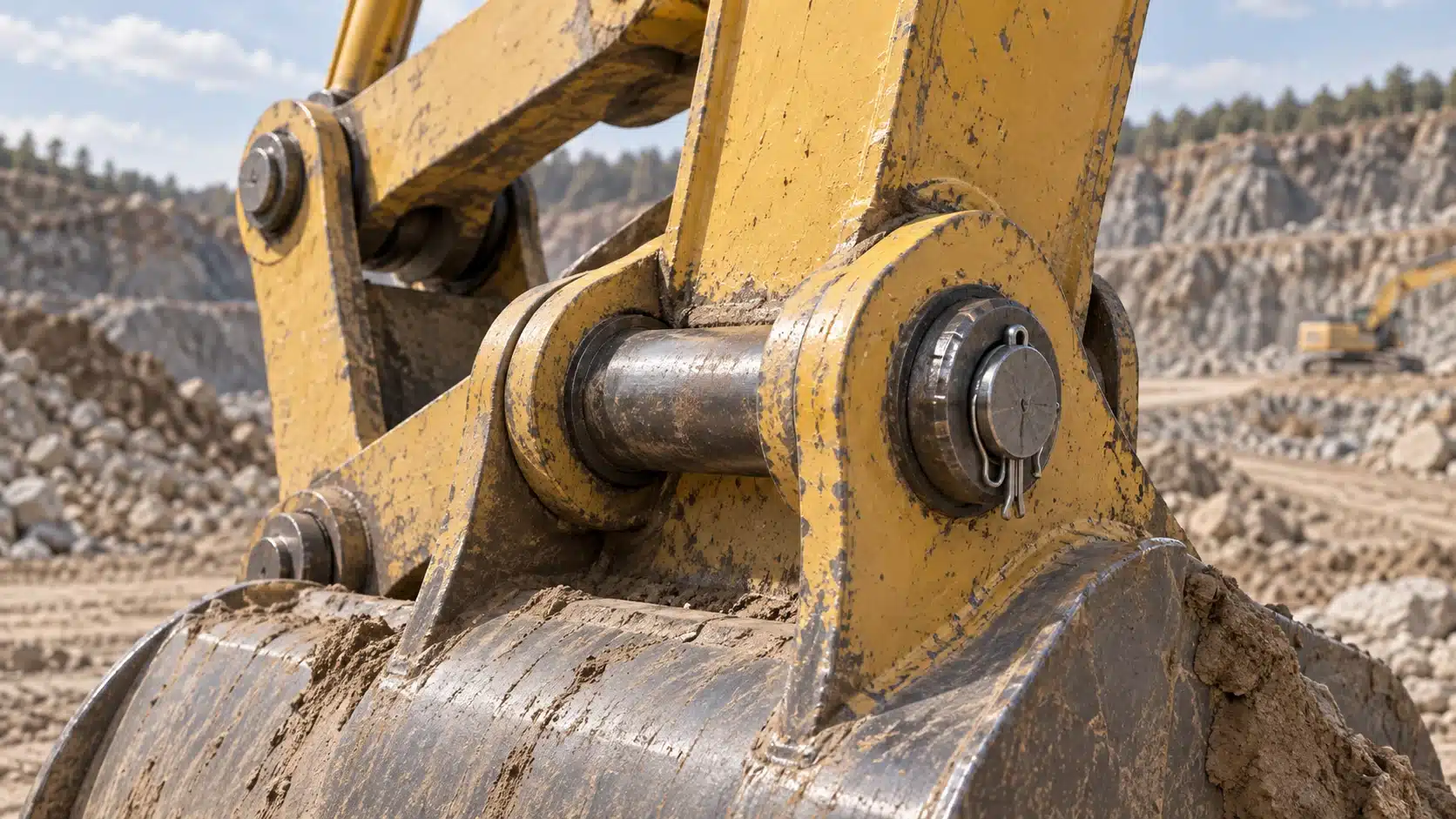
Why Excavator Linkage Bushings Wear Out Early and How to Prevent Repeat Failures
If an excavator linkage becomes loose soon after a repair, check what caused the wear before fitting another bushing. Dirt, poor lubrication, excessive loading and incorrect fit can damage the replacement too. This guide explains how to inspect boom, arm and bucket pivots and choose a replacement that suits the job