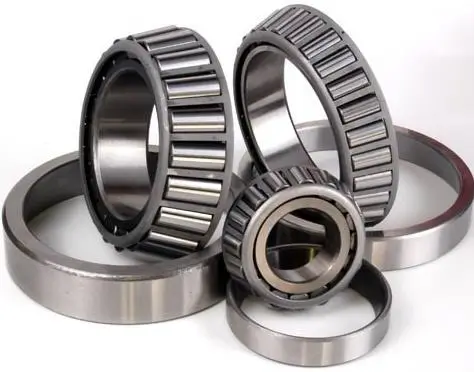
Interpretation of Bushing Knowledge

MYWAY Bushing: Top 5 Bushing and Bearing Manufacturers in China
Interpretation of Bushing Knowledge

The Weight of Performance: Why Bronze Remains the Heavyweight Champion in Industrial Bearing Applications

In the realm of heavy-duty industrial engineering, material selection is never a trivial decision. Among the myriad options available, bronze has endured as a trusted cornerstone—not despite its density, but precisely because of it. The question “Is bronze heavy?” often arises in procurement and design discussions, yet the answer extends far beyond a simple measurement of mass. This article explores why the “heaviness” of bronze is, in fact, its greatest engineering asset. From load capacity and wear resistance to thermal management and corrosion protection, we examine the functional advantages that make bronze the material of choice for demanding bushing applications. We also introduce MYWAY Bushings as a premier solution that harnesses these inherent properties to deliver reliability, longevity, and superior total cost of ownership.
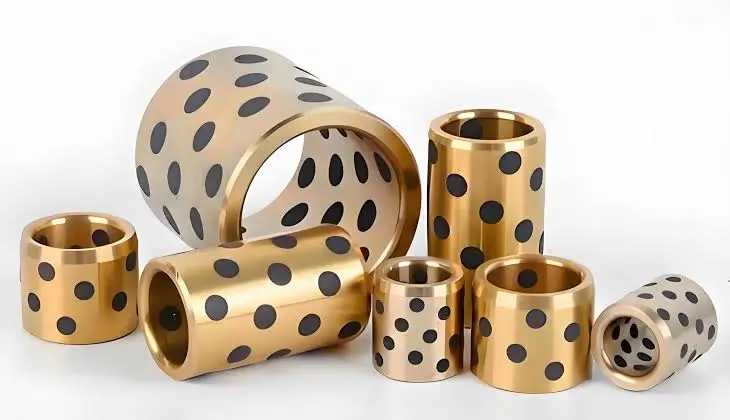
Interpretation of Bushing Knowledge

Premium Wear Plate: Engineering Longevity for High-Abrasion Industrial Assets

In high-wear industrial environments, equipment longevity is not merely a matter of maintenance scheduling—it is a direct determinant of operational profitability. Premium wear plates serve as the critical interface between heavy machinery and the abrasive forces that threaten structural integrity. These engineered components function as sacrificial armor, absorbing the punishment of continuous impact, sliding abrasion, and erosion that would otherwise consume capital equipment at an unsustainable rate

Interpretation of Bushing Knowledge

The Definitive Resource on Bushing Aluminum: Applications, Advantages, and Engineering Excellence

As an indispensable precision component in modern industrial systems, aluminum bushings have evolved far beyond simple pipe connections, extending into heavy machinery, automotive manufacturing, aerospace, and other high-end sectors. Leveraging the unique combination of lightweight construction, corrosion resistance, and high thermal conductivity inherent to aluminum alloys, these bushings deliver significant advantages in weight reduction, energy efficiency, improved system responsiveness, and extended maintenance intervals. Whether serving as reducing fittings in fluid systems or as plain bearings in mechanical equipment, aluminum bushings quietly yet critically ensure the reliable operation of countless assets.

Interpretation of Bushing Knowledge

Bush Mechanical Components: The Essential Guide to Functions, Applications, and Selection

In the realm of mechanical engineering and industrial equipment, few components are as fundamental yet frequently overlooked as the mechanical bushing. A mechanical bush—also referred to as a sleeve bearing, plain bearing, or journal bearing—is a cylindrical lining inserted between a shaft and its housing to reduce friction, absorb impact, support moving parts, and extend the service life of critical machinery. While rolling element bearings rely on balls or rollers to facilitate motion, bushings operate on sliding friction, making them exceptionally well-suited for low-speed, high-load, high-vibration, and harsh environmental conditions.

Interpretation of Bushing Knowledge

Maintenance-Free Bearings: The Engineered Solution for Zero-Lubrication, High-Reliability Industrial Motion

In the modern industrial landscape, unplanned downtime remains one of the most significant cost drivers across manufacturing, construction, and processing operations. A single bearing failure can halt an entire production line, trigger costly emergency repairs, and erode profit margins. Traditional lubricated bearings—while functional—introduce a recurring cycle of greasing, inspection, contamination risk, and eventual replacement that undermines operational efficiency.

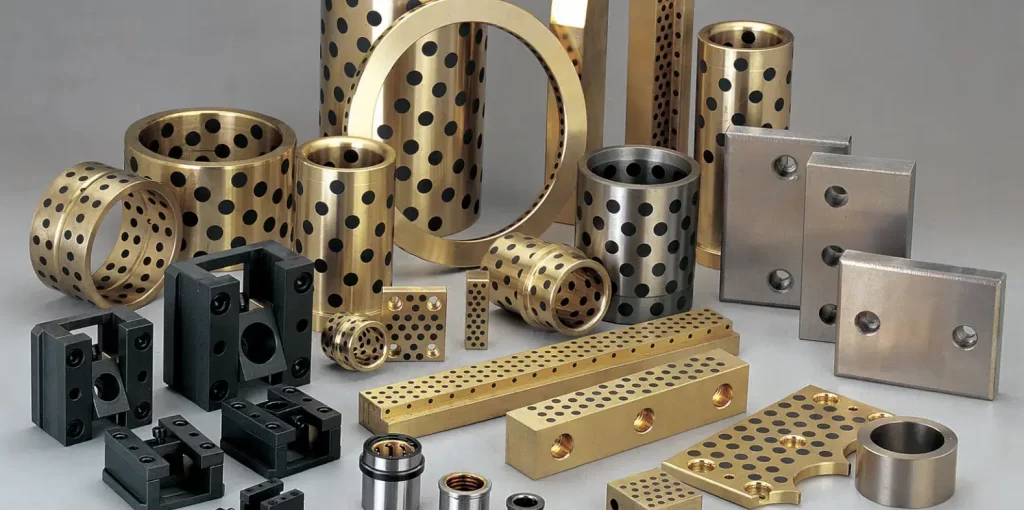
Metallic Bushes: High-Performance Metal Bearings & Self-Lubricating Bush
Interpretation of Bushing Knowledge

Bronze Bushings: The Engineering Workhorse for Heavy-Duty Industrial Applications

In the realm of mechanical engineering and industrial machinery, few components are as essential yet understated as the bronze bushing. These cylindrical plain bearings serve as the silent backbone of countless mechanical systems, enabling smooth rotational and linear motion while protecting valuable equipment from premature wear and failure. From the towering cranes at construction sites to the precision instruments in aerospace engineering, bronze bushings are indispensable across virtually every industrial sector

Interpretation of Bushing Knowledge

Bronze vs. Brass Bushings: A Comprehensive Technical Comparison for Industrial Applications

Bronze and brass represent two of the most widely utilized copper-based alloy families in industrial manufacturing. Despite their visual similarities and shared copper foundation, these materials exhibit fundamentally distinct metallurgical characteristics that dictate their suitability for specific engineering applications. For procurement engineers, maintenance managers, and design professionals engaged in bushing and bearing selection, understanding the nuanced differences between bronze and brass is a critical determinant of equipment reliability, operational longevity, and total cost of ownership. This comprehensive technical analysis examines bronze and brass through the lens of industrial bushing applications, providing actionable insights for informed material selection.

Lead in Bronze: The Self-Lubricating Metallurgical Solution for High-Performance Bearings and Bushings
Interpretation of Bushing Knowledge

Lead in Bronze: The Self-Lubricating Metallurgical Solution for High-Performance Bearings and Bushings

In the domain of plain bearing engineering, few material innovations have demonstrated the enduring practicality of leaded bronze alloys. The incorporation of lead into bronze matrices represents a deliberate metallurgical strategy—one that transforms a copper-tin base into a self-lubricating, anti-seizing, and highly embeddable engineering material. Leaded bronze bushings and bearings have become foundational components across heavy machinery, automotive systems, marine equipment, and industrial transmissions, precisely because the lead phase within the alloy delivers functional advantages that no single alternative material can fully replicate

Bearing Marine: Comprehensive Guide to Marine Bearings and Bushings
Interpretation of Bushing Knowledge

Bearing Marine: Comprehensive Guide to Marine Bearings and Bushings

Marine bearings serve as fundamental components within vessel propulsion and steering systems, enabling rotating shafts and moving parts to operate with reduced friction and controlled wear. These engineering components support propeller shafts, rudder stocks, and various deck equipment while withstanding the relentless challenges of seawater corrosion, heavy loads, and continuous operation. Understanding the functional principles, application scenarios, and material considerations of marine bearings is essential for vessel owners, naval architects, and maintenance engineers seeking reliable and cost-effective solutions.

Self-Lubricating Plastic Bearing Materials: The Maintenance-Free Alternative to Metal Bearings
Interpretation of Bushing Knowledge

Self-Lubricating Plastic Bearing Materials: The Maintenance-Free Alternative to Metal Bearings

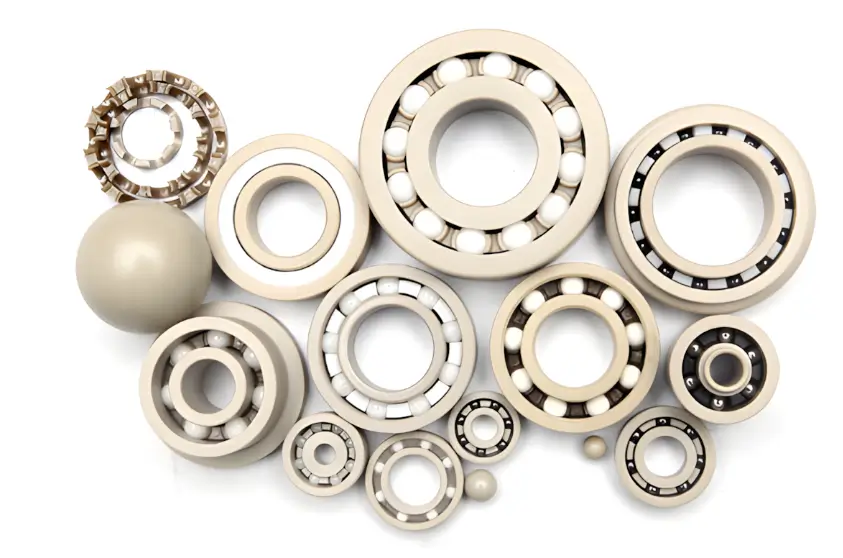
Plastic bearings are self‑lubricating bearings manufactured from engineering plastics as the base material. They are available in both rolling and plain (sliding) bearing configurations, with plain bearings accounting for the larger share. Unlike conventional metal bearings, plastic bearings rely on advanced polymer materials science and composite engineering to deliver reliable low‑friction, high‑wear‑resistance operation without the need for external lubrication. They have already become a significant alternative to metal bearings in a wide range of industries, including automotive manufacturing, food processing, medical equipment, and the chemical industry.

Scroll to Top